

Showing 321 - 331 of 331 results

Chronic kidney disease of unknown origin
In 2017, ANSTO's CEO signed a Memorandum of Understanding with Sri Lanka to work together to investigate the epidemiology of Chronic Kidney Disease of unknown origin (CKDu).

Project Manager for Computing and Electronics
Dr Nick Hauser received his PhD in Physics from the University of Technology Sydney in 1994.
ANSTO features in latest round of collaborative research grants
What's new in nuclear power technologies
It's ANSTO's role to keep Australia across the very latest developments in nuclear science and technology from around the world. Part of this responsibility is keeping us abreast of the latest developments in nuclear power technologies.
Celebrating our shining stars of science at the ANSTO Awards
Analysis of fingermarks with synchrotron techniques provide new insights
A new study by researchers from Curtin University using the infrared (IR) and X-ray fluorescence microscopy (XFM) beamlines at the Australian Synchrotron has provided a better understanding of the chemical and elemental composition of latent fingermarks.

Australian access to overseas synchrotrons
The International Synchrotron Access Program (ISAP) is administered by the Australian Synchrotron and is designed to assist Australian-based synchrotron users to access overseas synchrotron related facilities.
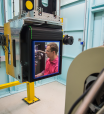
High Performance Macromolecular Crystallography Beamline (MX3)
The High Performance Macromolecular Crystallography beamline will enable the study of very small (sub-5 micrometre) or weakly diffracting crystals, providing a state-of-the-art high-throughput facility for researchers. MX3 will be able to study the structures of large proteins and protein complexes for virology, drug design and industrial applications via goniometer mounted crystals, in-tray screening, or via serial crystallography methods.

Nanoprobe beamline (NANO) - under construction
The BRIGHT Nanoprobe beamline provides a unique facility capable of spectroscopic and full-field imaging. NANO will undertake high-resolution elemental mapping and ptychographic coherent diffraction imaging. Elemental mapping and XANES studies (after DCM upgrade) will be possible at sub-100 nm resolution, with structural features able to be studied down to 15 nm using ptychography.

Melbourne Access Proposals
ANSTO’s user office in Melbourne offers access to the Australian Synchrotron, a world-class research facility with over 4,000 user visits per year. ANSTO seeks collaboration and partnerships with research organisations, scientific users and commercial users.