Advanced reactor research: Student opportunity
ANSTO is interested finding students to collaborate on Generation IV reactor systems.


Showing 321 - 340 of 792 results
ANSTO is interested finding students to collaborate on Generation IV reactor systems.
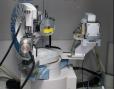
This instrument can measure reflectivity at air-solid or air-liquid interfaces.

Planetary science is an emerging research theme in Australia, and research at ANSTO is embedded in the heart of this.
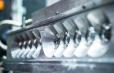
The Australian Centre for Neutron Scattering maintains a sample environment service for the instruments. It comprises a range of sample environments, two sample environment laboratories and four sample preparation laboratories.
Research confirms that methylcellulose, one of the most widely used hydrogel-forming materials in biomedical research and consumer products, organises itself into a structural architecture

Career Statement and Role at ANSTO
Frequently asked questions about the ANSTO Security Process, travel funding, ANSTO Research Portal and ACNS Customer Portal.

Awards and prizes granted at the User Meeting 2020 for scientists.

ANSTO's Melbourne location is home to the ANSTO-owned and operated Australian Synchrotron. The Synchrotron is one of the Australia's most significant pieces of scientific infrastructure.
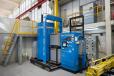
Hot Isostatic Pressing supports advanced manufacturing by increasing a material's density and reducing porosity. This capability complements ANSTO’s extensive suite of instruments and techniques for characterising materials and final products.

Since the discovery of superconducting Caintercalated graphite (CaC6) the intercalation of epitaxial graphene on SiC(0001) with Ca has been studied extensively in order to achieve superconductivity.


Do you love science? Here is a competition for you that combines chemistry and creativity! Discover the world of elements and create a poster for your favourite element in this new competition for school aged students.
International study has revealed a clustering of charged particles in the microgravity environment of space,with implications for the development of materials and better drugs that depend on the mixing of two or more charged particles.
In Part 2 of our series exploring the world of nuclear science and technology at ANSTO, we share more detailed information about the nuclear scientist’s toolkit.
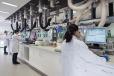
The Australian Critical Minerals Research and Development Hub (the Hub) unites the expertise of top Federal science agencies: ANSTO, Geoscience Australia, and CSIRO with the aim of addressing technical challenges and drive collaborative research across the critical minerals value chain.


ANSTO has been tracking and publishing data on fine particle pollution from key sites around Australia, and internationally, for more than 20 years.