

Showing 341 - 360 of 459 results
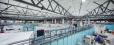
Melbourne Access Proposals
ANSTO’s user office in Melbourne offers access to the Australian Synchrotron, a world-class research facility with over 4,000 user visits per year. ANSTO seeks collaboration and partnerships with research organisations, scientific users and commercial users.
Japanese scientists collaborate on self-healing ceramics for nuclear reactors
ANSTO researchers have taken up the challenge to develop a coating for the cladding used in nuclear reactors to prevent it from taking up hydrogen and releasing it if temperatures get too high and repair itself if damaged.
Partnering with government and Aboriginal organisations to ensure the safety of drinking water in Aboriginal communities
ANSTO is working with government partners to ensure that radioactivity in drinking water supplied to Aboriginal communities is at levels considered safe for consumption.
International science team paves way for fast and accurate flu diagnosis
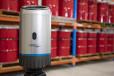
CORIS360® case studies
WA outback proves no match for Aussie nuclear know-how
A dedicated team of radiation specialists from the Australian Nuclear Science and Technology Organisation (ANSTO) are behind the successful detection and rapid retrieval of a missing radioactive source in outback Western Australia.
Research highlights published and Swiss delegation visits
Headed to Antarctica
Young researcher accepted into the Australian Antarctic Science Program.
ABC showcases research on plants heading to the moon
ABC has reported space research on plants being sent to the moon at the Centre for Accelerator Science.
Progress on new oxide ion conductors
New material shows enhanced conductivity for solid oxide fuel cells used in satellites, spacecraft, transport vehicles and as power source

Graduate Program
ANSTO's Graduate Program develops the next generation of Australian business and science leaders, by providing the best and brightest postgraduate students with a two-year rotation cycle, tailored to match your talents, goals and interests.
Collaboration publishes landmark blue carbon study
ANSTO environmental scientists contribute to investigation of carbon capture in wetlands.
ANSTO helping to ensure the safety of astronauts in space
A team of ANSTO health researchers, staff at the Centre for Accelerator Science and Dr Melanie Ferlazzo, a postdoc from the French National Institute of Health and Medical Research (INSERM), and scientists from the French Space Agency (CNES), are collaborating on investigations to determine the impact of secondary particles on human cells using the new microprobe beamline at ANSTO’s Centre for Accelerator Science.
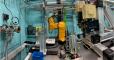
Micro-Computed Tomography beamline (MCT)
With enhanced submicron spatial resolution, speed and contrast, the Micro-Computed Tomography beamline opens a window on the micron-scale 3D structure of a wide range of samples relevant to many areas of science including life sciences, materials engineering, anthropology, palaeontology and geology. MCT will be able to undertake high-speed and high-throughput studies, as well as provide a range of phase-contrast imaging modalities.
Physicist to become surrogate inspector
Young physicist in training to become a surrogate inspector for Comprehensive Nuclear Test Ban Treaty Organisation.
Experiments carried out on Antarctic flight
State- of-the-art microdosimeters used in research

Australian access to overseas synchrotrons
The International Synchrotron Access Program (ISAP) is administered by the Australian Synchrotron and is designed to assist Australian-based synchrotron users to access overseas synchrotron related facilities.
Transistors and NASA's radiation paradox: strength in detection, weakness in space operations
The nature of Metal-Oxide-Semiconductor Field Effect Transistors (MOSFETs) present a fascinating paradox in space exploration. Their strength in radiation detection becomes their weakness in space operations, exposing an Achilles' heel for NASA. Yet, these same devices monitor radiation doses received by humans on earth and in space.
Beamline Scientist - Infrared Microscpectroscopy (IRM)