Search hero banner

Search results

Showing 41 - 56 of 56 results

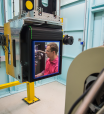
High Performance Macromolecular Crystallography Beamline (MX3)

High Performance Macromolecular Crystallography Beamline (MX3)

The High Performance Macromolecular Crystallography beamline will enable the study of very small (sub-5 micrometre) or weakly diffracting crystals, providing a state-of-the-art high-throughput facility for researchers. MX3 will be able to study the structures of large proteins and protein complexes for virology, drug design and industrial applications via goniometer mounted crystals, in-tray screening, or via serial crystallography methods.

After your experiment

Frequently Asked Questions

Frequently asked questions about the ANSTO Security Process, travel funding, ANSTO Research Portal and ACNS Customer Portal.

OPAL reactor back online after planned long shutdown

ANSTO’s OPAL multi-purpose research reactor at Lucas Heights has officially returned to power and recommenced operations, following a months-long planned shutdown to carry out essential maintenance and upgrades.

MEX Hutch A

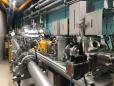
Medium Energy X-ray Absorption Spectroscopy Beamline (MEX-1 and MEX-2)

The Medium Energy- X-ray Absorption Spectroscopy beamlines provides access to XANES and EXAFS data from a bending magnet source, optimised for cutting-edge applications in biological, agricultural and environmental science in an energy range that is not currently available at the Australia Synchrotron.

Detection and Imaging team

About us

The Detection & Imaging group builds on ANSTO’s 70-year history of scientific achievements and contributions in meeting the nuclear needs of industry, globally.

Anonymity

Anonymised Review

ANSTO has agreed to participate in an Australian trial of a review of research infrastructure access proposals in which applicants remain anonymous to aid the removal of structural barriers to the career progression of Women in STEM.

Smoke pollution

Highlights - Aerosol Sampling

ANSTO has been tracking and publishing data on fine particle pollution from key sites around Australia, and internationally, for more than 20 years.  

Pagination