Beamtime guide - Imaging and Medical
Information has been provided to assist with the preparation of experiment proposals and beamtime.


Showing 41 - 60 of 61 results
Information has been provided to assist with the preparation of experiment proposals and beamtime.
Dingo sees through heavy corrosion to help dentify an historic firearm.
The analytical power of non-destructive X-ray fluorescence microscopy (XFM) at the Australian Synchrotron has been highlighted in a book chapter in Giorgione, Dante and the Sydney Incunable that features its use on an historic Renaissance work, Dante’s Commedia.
Synchrotron infrared technique reveals first insights into evolution and structure of Australian basket-web spider’s silk.
Research is being undertaken through an Australian Research Council Discovery Project "Reconstructing Australia’s fire history from cave stalagmites", led by Professor Andy Baker at UNSW Sydney and Dr. Pauline Treble at ANSTO. The project aims to calibrate the fire-speleothem relationship and develop coupled fire and climate records for the last millennium in southwest Australia.
Radiocarbon measurements at ANSTO’s Centre for Accelerator Science have supported research published that provided insights into what the environment was like for the Aboriginal artists who created rock art over intervals spanning 43,000 years.
Radiocarbon dating at ANSTO has supported new archaeological research conducted by Flinders University and the University of Queensland that describes significant earth mound features used for cooking that were created by Aboriginal people in the Riverland region of South Australia.
Just under 250 schools in Australia and one school in Malaysia will participate in a series of science-based competitions during to coincide with National Science Week in 2024.
Dr Mitra Safavi Naeini continues her commentary of the radiation studies being undertaken in the Artemis II mission.
Devices that use quantum sensors take advantage of quantum properties, unlike conventional instruments that apply classical physics in their operation.

ANSTO's Sydney locations are home to the Open Pool Australian Light-water (OPAL) multi-purpose reactor, the Centre for Accelerator Science (CAS), the Australian Centre for Neutron Scattering, the National Research Cyclotron and the National Deuteration Facility.

The Think Science! competition encourages students in Years 3-10 to learn science inquiry skills in a fun and accessible way! Entry is FREE and there are generous prizes for winning schools. Any topic can be chosen, and special materials are not required.
In a paper published yesterday, Traditional Owners and researchers report on the oldest securely dated pottery discovered in Australia, located at Jiigurru (Lizard Island Group) on the Great Barrier Reef.

This COVIDSafe Plan describes the actions that ANSTO will take to keep our staff, contractors and visitors safe and minimise the risk of the spread of COVID-19 infection.

Your students can analyse real research data from ANSTO scientists.
Environmental scientist with a passion for fieldwork and a lifelong commitment to scientific excellence
In Australia and the Southeast Asia basin, the ANSTO facility offers a wide range of unique nuclear-beam techniques for cultural heritage research.

Australian Nuclear Science and Technology Organisation (ANSTO) is committed to protecting your personal information in accordance with the Privacy Act 1988 (Cth) (Privacy Act) and the Australian Privacy Principles.
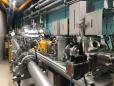
The Medium Energy- X-ray Absorption Spectroscopy beamlines provides access to XANES and EXAFS data from a bending magnet source, optimised for cutting-edge applications in biological, agricultural and environmental science in an energy range that is not currently available at the Australia Synchrotron.