

Showing 41 - 60 of 124 results
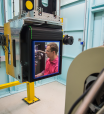
High Performance Macromolecular Crystallography Beamline (MX3)
The High Performance Macromolecular Crystallography beamline will enable the study of very small (sub-5 micrometre) or weakly diffracting crystals, providing a state-of-the-art high-throughput facility for researchers. MX3 will be able to study the structures of large proteins and protein complexes for virology, drug design and industrial applications via goniometer mounted crystals, in-tray screening, or via serial crystallography methods.
Innovator in energy and sustainability uses power of synchrotron light to make advances
Nobel Prizes recognise insights at molecular and atomic scale
The Nobel Prizes for Physics, Chemistry and Medicine have been announced.
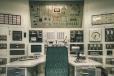
Decommissioning

Head of Radiochemistry
Role at ANSTO

Lead, Food Materials Science; Instrument Scientist, QUOKKA (Small-Angle Neutron Scattering); Honorary Professor, CNFS, The University of Queensland
Role at ANSTO

Laboratory Operations Manager, National Deuteration Facility
Role at ANSTO
ANSTO scientists help refine estimates of global methane emissions
A groundbreaking international study has provided new insights into global fossil methane emissions, using innovative multi-isotopic atmospheric measurements.

New User Symposium 2023 Program
Timetable and Teams links

Energy use and emissions
Detailed data on ANSTO electricity use and CO2 emissions for FY2024 - FY2025

Imaging Physiologist
Role at ANSTO

UM2022 Speakers

Management of nuclear reactor fuel
ANSTO has safely managed its radioactive waste for over 60 years. Waste is managed in accordance with national and international standards.
ANSTO facilities and expertise supply a large range of radioisotopes for radiopharmaceutical and environmental applications
Excellent radiolabelling facilities and the operation of OPAL, a world-class multi-purpose nuclear reactor, enable ANSTO to produce a large range of radioisotopes for Australian researchers in both radiopharmaceutical and environmental areas.
ANSTO welcomes $13.9M critical minerals funding
Rare earth elements will be a key area of focus for the Australian Nuclear Science and Technology Organisation’s Minerals unit as it welcomes a $13.9 million funding allocation under the Australian Critical Minerals Research and Development Hub
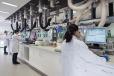
Australian Critical Minerals Research & Development Hub
The Australian Critical Minerals Research and Development Hub (the Hub) unites the expertise of top Federal science agencies: ANSTO, Geoscience Australia, and CSIRO with the aim of addressing technical challenges and drive collaborative research across the critical minerals value chain.
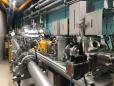
Medium Energy X-ray Absorption Spectroscopy Beamline (MEX-1 and MEX-2)
The Medium Energy- X-ray Absorption Spectroscopy beamlines provides access to XANES and EXAFS data from a bending magnet source, optimised for cutting-edge applications in biological, agricultural and environmental science in an energy range that is not currently available at the Australia Synchrotron.

Imaging Neurophysiologist
Role at ANSTO
Neutron Reflectometry Instrument Scientist