

Showing 421 - 440 of 775 results
Innovator in energy and sustainability uses power of synchrotron light to make advances
Promising material provides a simple, effective method capable of extracting uranium from seawater
An Australian-led international research team, including a core group of ANSTO scientists, has found that doping a promising material provides a simple, effective method capable of extracting uranium from seawater.
Single session radiation therapy nearing a reality
ANSTO’s Australian Synchrotron has been working on an initiative that could substantially improve radiotherapy treatment for cancer patients.
New study reveals understanding of a basic physical property of charged particles in microgravity
International study has revealed a clustering of charged particles in the microgravity environment of space,with implications for the development of materials and better drugs that depend on the mixing of two or more charged particles.
Through the looking glass: the strange atomic structure of glassy materials
The mechanical, electrical, chemical, optical and thermal properties of glass, as determined by its chemical composition and atomic structure, make it a highly useful material with a myriad of applications.
Partnering in Antarctic research
Environmental scientists at ANSTO will contribute to major Antarctic research project in Antarctica funded by the Australian Research Council.
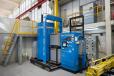
Hot Isostatic Pressing
Hot Isostatic Pressing supports advanced manufacturing by increasing a material's density and reducing porosity. This capability complements ANSTO’s extensive suite of instruments and techniques for characterising materials and final products.
Powerhouse Museum used powerful non-invasive nuclear and accelerator techniques to gain information about significant Aboriginal cultural belongings
A number of sophisticated non-invasive nuclear and accelerator techniques were used to provide information about the origin and age of an Australian Aboriginal knife held in the collection of the Powerhouse Museum.

Mitigation and Optimisation of Radiation Responses
This program explores the mechanism and outcome of the interaction of radiation on biological systems in order to improve our understanding of the impact of radiation on the brain, optimise radiotherapy and develop mitigation strategies for space travellers.

The 2025 ANSTO Australian Synchrotron Stephen Wilkins Medal
ANSTO is seeking nominations for the ANSTO Australian Synchrotron Stephen Wilkins Thesis Medal.
The 2026 ANSTO Australian Synchrotron Stephen Wilkins Medal
ANSTO is seeking nominations for the ANSTO Australian Synchrotron Stephen Wilkins Thesis Medal.
Progress on dark matter lab
Moving earth in the search for dark matter: laboratory construction underway at mine site.
Successfully navigating the challenges of replacing a component in a nuclear reactor
The installation of a cold neutron source (CNS), a component that reduces the energy and speed of the neutrons from a research reactor for use in scientific instruments, was successfully completed in September 2024.
Towards realisation of novel semiconductor radiation detectors
Potential good news for a warming world
Collaboration finds that old carbon reservoirs are unlikely to cause a massive greenhouse gas release in a warming world.

Beamtime Guide, Technical Info and Updates - MX1 & MX2
The Macromolecular Crystallography beamlines at the Australian Synchrotron (MX1 and MX2) are general purpose crystallography instruments for determining chemical and biological structures.
Unusual state of matter in new material holds promise for transformative quantum technologies
ANSTO has provided supporting experimental evidence of a highly unusual quantum state, a quantum spin liquid (QSL), in a two-dimensional material.

Shorebirds Competition 2020
A lesson in Science and Sustainability.
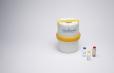
ANSTO's Gentech® Generator
Supporting healthcare professionals in Australia with easy-to-access resources related to ANSTO’s Gentech® Generator.