Does size matter?
Improving aquaculture for food production in Papua New Guinea


Showing 441 - 460 of 1371 results
Improving aquaculture for food production in Papua New Guinea

Shorebirds Competition 2021 results.
La Trobe University researchers have used the Australian Synchrotron in a new study that reveals how crocodiles resist fatal fungal infections with a unique pH sensing mechanism despite living in filthy water.
This month, ANSTO hosted a delegation from the International Partnership for Nuclear Disarmament Verification (IPNDV) as part of the IPNDV’s Plenary meeting in Sydney. The meeting marked the first time Australia has hosted the IPNDV.
Applications, Recent results, Publications.

In 2023 ANSTO produced its 2nd Innovate Reconciliation Action Plan to guide reconciliation actions.
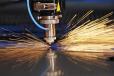
ANSTO infrastructure and capabilities are ideally suited for solving problems relating to the development and characterisation of advanced materials, the engineering of manufactured components and manufacturing processes.
ANSTO infrastructure and capabilities is ideally suited for solving problems relating to the development and characterisation of advanced materials, the engineering of manufactured components and manufacturing processes.
ANSTO highlighted its food origin research with live shows and an expert panel discussion to showcase Australian science in the Australia Pavilion at the Expo 2025 Osaka from 8-10 October.
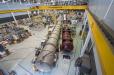
Proposals at the Australian Centre for Neutron Scattering and National Deuteration Facility.
New technology is being developed in Sydney to recycle used Personal Protective Equipment (PPE) and turn it into raw materials for 3D printing.
Collaborators used X-ray imaging to understand the fine detail of how a damaging fungal pathogen reduces leaf function and grain yield of wheat crops.
Understanding of the role that programmed cell death has in development.
Hosts workshop on nuclear forensics for IAEA members.

Sample environments, Data analysis.
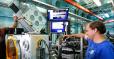
The SAXS / WAXS beamline at the Australian Synchrotron is a highly flexible x-ray scattering facility with purpose-built optics and a very flexible endstation and SAXS camera enable multiple types of experiments.