Our understanding of the atom powers ANSTO's nuclear and accelerator research techniques
Scientists at ANSTO characterise structures with atomic detail using probes such as x-rays, electrons, neutrons and ions.


Showing 481 - 500 of 1815 results
Scientists at ANSTO characterise structures with atomic detail using probes such as x-rays, electrons, neutrons and ions.
Ultra-realistic simulations of a PET imaging system for next-generation radiotherapy: Collaboration giving back to the open source science community.
New technology is being developed in Sydney to recycle used Personal Protective Equipment (PPE) and turn it into raw materials for 3D printing.

ANSTO operates Work Health and Safety and Environmental Management Systems designed to ensure the safety of its employees, partners and members of the public to minimise the impact of our activities on the environment.

Our services include the use of techniques to develop innovative radiation detector technology, such as performing alpha spectroscopy to characterise charge collection capability and radiation transport simulation. We also have expertise in measuring the electrical characteristics of novel detectors and semiconductor devices.
Devices that use quantum sensors take advantage of quantum properties, unlike conventional instruments that apply classical physics in their operation.
Collaborators used X-ray imaging to understand the fine detail of how a damaging fungal pathogen reduces leaf function and grain yield of wheat crops.

In Australia and the Southeast Asia basin, the ANSTO facility offers a wide range of unique nuclear-beam techniques for cultural heritage research.

ANSTO recognised the contribution of individuals and teams to nuclear science and technology at the 2023 ANSTO Awards Ceremony held on 25 July.

ANSTO offers accelerator-based particle-induced gamma-ray emission techniques to determine total fluorine concentration in a range of solid materials and rapidly screen for the presence of PFAS (perfluoroalkyl and polyfluoroalkyl substances).
In 2023 we’re celebrating the 70th Anniversary since Australia began developing our nation’s Australia’s nuclear capabilities.

Nuclear-based energy generation systems not only provide comparatively low-cost, low-carbon emission electricity but also provide substantial amounts of process heat.
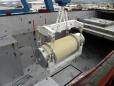
ANSTO waste management services meet regulatory requirements and international best practice standards.

Australasia is home to some of the oldest rock art motifs in the world. In tropical latitudes, due to climate change, the rock art deterioration is accelerating.

The Centre for Acclerator Science operates accelerators that can be used for space radiation testing.
Helen's research interests focus on determining the thermoelastic properties and crystal chemistry of a range of minerals which are of interest in a variety of environmental, planetary geology and industrial settings.

Dr Safavi-Naeini is the Acting Leader of the Centre for Accelerator Science. She is a particle physicist and previously had a role as a research leader at the Human Health group.
The nature of Metal-Oxide-Semiconductor Field Effect Transistors (MOSFETs) present a fascinating paradox in space exploration. Their strength in radiation detection becomes their weakness in space operations, exposing an Achilles' heel for NASA. Yet, these same devices monitor radiation doses received by humans on earth and in space.