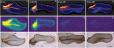
Radiotracer studies
The use of radioisotopes, radiolabeled molecules and radioactive particles in conjunction with a range of quantitative imaging spectroscopy and radiation counting methods.


Showing 521 - 540 of 2698 results
The use of radioisotopes, radiolabeled molecules and radioactive particles in conjunction with a range of quantitative imaging spectroscopy and radiation counting methods.

The Biosciences team undertakes the radiolabelling of chemical, biochemical. biological or material vector for the purpose of radiotracing in living systems.

Expertise in the use of PET and SPECT imaging techniques to understand biological processes at the cellular and molecular level. The techniques ae also used to study disease processes and monitor the effects of new therapies
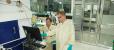
ANSTO provides a range of radiotracers for pre-clinical and clinical research using the OPAL multipurpose reactor. Users can access more than 300 known radiotracers. If a starting material is provided, new and non-commercial radiotracers can be produced.
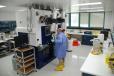
Using the OPAL multipurpose reactor,, ANSTO can provide a diverse suite of radioisotopes for research and applications


Project members of the Water Isotope Network.

The Planetary Materials theme at ANSTO is co-ordinated by Helen Maynard-Casely and Helen Brand.

Project members of Magnetism.

Research team for the Aerosol sampling program
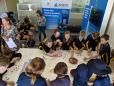
ANSTO's education team located in the Discovery Centre offers a wide variety of learning resources and engaging content that aligns with the NSW curriculum, as well as offering the general public insights into science, ingenuity and sustainability.
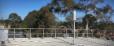
ANSTO continually monitors environmental gamma radiation from a station located in Engadine NSW. ANSTO uses environmental radiation data to evaluate atmospheric dispersion from its site. This radiation is almost completely natural background radiation.
ANSTO joined the Australian delegation at the 68th General Conference of the International Atomic Energy Agency (IAEA) last month in Vienna, participating in a number of insightful side-events and fruitful bilateral partnership meetings.
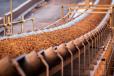
Our world is rapidly transitioning to renewable energy and electric transport systems that require the safe and efficient mining of various metals.

ANSTO continually collects meteorological data from its 50-metre tower. A summary of ANSTO's climate statistics including temperature, wind speed and direction, relative humidity, atmospheric pressure and rainfall recorded at this location are provided below.

ANSTO is a highly regulated organisation. Our governance system and processes provide critical guidance to effectively manage ANSTO’s activities. This section outlines the processes and systems that are in place to provide assurance to Government, our stakeholders and the community that we are working within our regulated and mandated requirements.

ANSTO's Melbourne location is home to the ANSTO-owned and operated Australian Synchrotron. The Synchrotron is one of the Australia's most significant pieces of scientific infrastructure.

ANSTO's Sydney locations are home to the Open Pool Australian Light-water (OPAL) multi-purpose reactor, the Centre for Accelerator Science (CAS), the Australian Centre for Neutron Scattering, the National Research Cyclotron and the National Deuteration Facility.