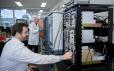
Radioactivity Measurement
ANSTO has responsibilities mandated by the Australian Government for the maintenance of the national measurement standard for radioactivity.


Showing 581 - 600 of 2253 results
ANSTO has responsibilities mandated by the Australian Government for the maintenance of the national measurement standard for radioactivity.

Stay updated with the latest news and notifications impacting ANSTO's landmark research infrastructure in both Sydney and Melbourne.
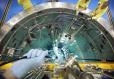
ANSTO addresses key scientific questions in the nuclear fuel cycle for both the current generation of nuclear reactors and future systems.

ANSTO's procurement policy is closely aligned with the Commonwealth Procurement Guidelines and makes use of the Australian National Audit Office guidelines on ethics, accountability and transparency.
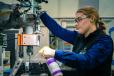
Ready to start a hands-on career? ANSTO’s Apprenticeship Program gives you the chance to earn while you learn, build real trade skills and contribute to work that supports Australia’s leading nuclear science and technology organisation.
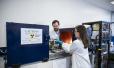
The work of the group comprises Radioactivity Measurement Standards, Radioanalytical chemistry, Environmental Radioactivity Measurement Centre, Nuclear security science and Environmental monitoring.
ANSTO provides secondary students with a range of learning resources for those interested in science or studying for exams. For teachers, ANSTO provides learning resources and professional development, as well as in-school-term science tours and videoconferences. Workbooks are provided as required learning material to accompany a school visit to ANSTO. They can also be used on their own as a classroom resource.
Join us for this online webinar to explore and discuss the huge opportunities in growing a dynamic and impactful future nuclear workforce.
ANSTO recognises the traditional indigenous owners of the land at all its sites and works to contribute to the recognition of the indigenous cultural heritage of Australia.
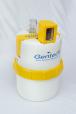
ANSTO’s nuclear medicine processing and distribution facility assembles, loads, tests and distributes a range of nuclear medicine products, including Mo-99. The Mo-99 is dispensed into an ANSTO radiopharmaceutical Gentech® Generator where it decays to Tc-99m.


The new facility will be built around a product line of ANSTO’s design – a new Technetium-99m generator – that will enable greater process automation than is possible with existing technology, leading to improvements in efficiency, quality and importantly the highest levels of production safety.
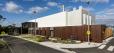
ANSTO's Mo-99 manufacturing facility secures Australia’s ability to produce Mo-99 to meet current and future domestic demand and provide a significant proportion to support global demand.