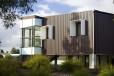
Australian Synchrotron guesthouse
The Australian Synchrotron has an on-site Guesthouse for users and AS guests.


Showing 61 - 80 of 820 results
The Australian Synchrotron has an on-site Guesthouse for users and AS guests.

Researchers led by the University of Bristol (UK) have identified a possible cause of SARS-CoV-2’s increased infectivity compared to SARS-CoV
Frequently asked questions about beamtime, accommodation and the user portal.
Singapore researchers publish findings of link between proteins of archaea and eukaryotes despite being separated by more than 2 billion years of evolution.
Parents can use their NSW Government Creative Kids Voucher to pay for ANSTO's School Holiday workshops.
Research confirms that methylcellulose, one of the most widely used hydrogel-forming materials in biomedical research and consumer products, organises itself into a structural architecture

Detailed data on ANSTO electricity use and CO2 emissions for FY2024 - FY2025
A rare collection of traditional Aboriginal wooden objects in varying degrees of preservation found along a dry creek bed in South Australia have been dated to a period spanning 1650 to 1830 at the Centre for Accelerator Science at ANSTO.
A research team from ETH Zurich developing and characterizing silicon carbide devices for power electronics, recently spent time at ANSTO’s Centre for Accelerator Science to use a specialised beamline in their investigations.
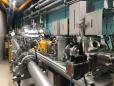
The Medium Energy- X-ray Absorption Spectroscopy beamlines provides access to XANES and EXAFS data from a bending magnet source, optimised for cutting-edge applications in biological, agricultural and environmental science in an energy range that is not currently available at the Australia Synchrotron.

ANSTO joined the Australian delegation at the 68th General Conference of the International Atomic Energy Agency (IAEA) last month in Vienna, participating in a number of insightful side-events and fruitful bilateral partnership meetings.
Scientists from the Walter and Eliza Hall Institute (WEHI) are using the unique immune system of the alpaca and techniques at the Australian Synchrotron as part of research using antibodies to disrupt COVID-19 viral entry into cells.