

Showing 641 - 660 of 1603 results
Neutron scattering a natural tool for food science and technology research
Understanding radiation damage at the atomic scale
Dr Peter Kappen helping to shape Australia’s innovation future
New global, first-of-a-kind ANSTO Synroc facility
A new nuclear medicine waste processing facility that showcases ANSTO Synroc technology is under construction.
An innovative way to deliver drugs using nanocrystals shows potential benefits
Monash University researchers have used advanced techniques at ANSTO to investigate the production of new, elongated polymer nanocapsules with a high payload of drug nanocrystals to potentially increase drug targetability, and also decrease dosage frequency and side effects.
Careers at ANSTO
ANSTO seeks candidates who are passionate about making a contribution to Australian society through supporting nuclear science and technology.
Microscale clues provide insight into cataclysmic Tongan volcanic eruption
In an effort to understand why the Tongan Hunga volcano eruption was so explosive, internationally-recognised volcanologist Prof. Shane Cronin of the University of Auckland and associates rely on beamlines at the Australian Synchrotron to support comprehensive research on the Hunga event.
A look back at the monumental achievement of constructing the OPAL reactor
INVAP, the Argentinian advanced nuclear technology company, who designed and constructed the Open Pool Lightwater Reactor (OPAL) for ANSTO to replace the HIFAR reactor is celebrating 50 years of operations with the visit of a group of INVAP executives to ANSTO to celebrate their achievements and discuss future collaborations.
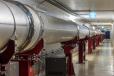
Imaging and medical
The Imaging and Medical beamline (IMBL) is a flagship beamline of the Australian Synchrotron built with considerable support from the NHMRC. It is one of only a few of its type, and delivers the world’s widest synchrotron x-ray ‘beam’.
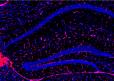
Understanding the biological response to radiation
Research is undertaken to characterise and optimise the beneficial impacts of radiation on living matter

Secondary Education
Challenge your understanding of nuclear science and technology with fun secondary school activities, exciting competitions and unique tours of our facilities.
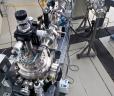
Particle Induced Gamma Ray Emission
Particle induced gamma-ray emission (PIGE) is typically run in conjunction with PIXE and RBS and is used to quantify concentrations of elements such as lithium, fluorine, sodium, magnesium and aluminium.
Earthquake clues unearthed in strange, precariously balanced rocks
Imperial College London researchers tapped into ancient geological data locked within precariously balanced rocks using a new technique to boost the precision of hazard estimates for large earthquakes.
Preventing catastrophic failure in lithium ion batteries
Technology pioneered at ANSTO
Technology at heart of award-winning wastewater innovation from BioGill.
Part 2: Chaos in three-body systems and applications at ANSTO
Update on PNG aquaculture project to improve the industry and benefit the local population
PNG researcher provides a progress update on an aquaculture project to improve the industry and benefit the local population