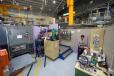
Kookaburra - Ultra small angle neutron scattering
Ultra small angle neutron scattering on Kookaburra is used to study the size and shape of objects of size 10 micrometres and below.


Showing 641 - 660 of 995 results
Ultra small angle neutron scattering on Kookaburra is used to study the size and shape of objects of size 10 micrometres and below.
An international team has published research in Nature today that identified the oldest known mummified remains of an exceptionally well-preserved terrestrial vertebrate, a 289-million-year-old reptile Captorhinus.
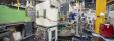
Kowari, a residual stress diffractometer, can be used for ‘strain scanning’ of large engineering components as large as 1000 kilograms.
Principal Research Scientist Andrew Smith is travelling to the Taylor Glacier in Antarctica with American collaborators on a 3-year National Science Foundation project now in its final year that involves mining tonnes of ice for palaeoclimate research.
Using nuclear techniques to establish the great antiquity of Aboriginal culture: World Heritage Listing for Budj Bim Cultural Landscape.
Ancient groundwater in Australia contributing carbon to food webs through surface water.
Specifications, Beryllium Filter, User Manual, Instrument reference
Nanostructure engineered low activation superconductors for fusion energy research.
Measurement research undertaken to ensure safe, well-engineered nanoparticles

Your students can analyse real research data from ANSTO scientists.
The analytical power of non-destructive X-ray fluorescence microscopy (XFM) at the Australian Synchrotron has been highlighted in a book chapter in Giorgione, Dante and the Sydney Incunable that features its use on an historic Renaissance work, Dante’s Commedia.

The Infrared microspectroscopy microscopes can record spectra from a range of different samples; from thin microtomed sections to polished blocks and embedded particles. This section highlights the types of samples that can be analysed using the IRM beamline
This month ANSTO is opening its doors to 11 talented young people from across Australia as the two-year Graduate Program kickstarts.
Senior electronics engineer from SESAME visits following donation of instrumentation to the Middle East's synchrotron in Jordan.
Researchers from La Trobe University have used the Australian Synchrotron to help identify a key mechanism in how SARS-CoV-2 damages lung tissue.