Space research collaboration
ANSTO launches new area of space research in collaboration with the National Centre for Space Studies and the National Institute of Health and Medical research in France.


Showing 701 - 720 of 1171 results
ANSTO launches new area of space research in collaboration with the National Centre for Space Studies and the National Institute of Health and Medical research in France.
A large collaboration of Australian and New Zealand researchers has established that a thin film technology can be used to monitor stormwater effectively and provides a way to translate the presence of metal contaminants into potential risks to aquatic ecosystems.

ANSTO's Melbourne location is home to the ANSTO-owned and operated Australian Synchrotron. The Synchrotron is one of the Australia's most significant pieces of scientific infrastructure.
3D models of multilayered structures on engineering scale from nanoscale damage profiles.

Dr Peter Kappen manages the Spectroscopy Group at the Australian Synchrotron.
Ongoing media statements relating to nuclear medicine production.
Nuclear techniques used in investigation of a new class of micro and nanoscale zinc fertilisers.
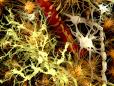
This program uses ANSTO’s nuclear capabilities to identify, quantify, and monitor the mechanisms which cause, or influence the development and progression of chronic diseases.
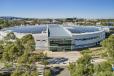
ANSTO is seeking nominations for the ANSTO Australian Synchrotron Stephen Wilkins Thesis Medal.
ANSTO is seeking nominations for the ANSTO Australian Synchrotron Stephen Wilkins Thesis Medal.
The role of trace elements as palaeoclimate proxies has been explored in ANSTO-led collaborative environmental research.
Publications highlights three young researchers
A new source added to ANSTO’s cosmogenic toolkit to study past climate and landscape change
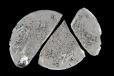
Within the bulk structure of such glasses, boron is known to be a key actor, as it exhibits intriguing and composition-dependent changes in coordination state that often drive properties.
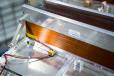
Sample environments, Data Analysis, Mail-in Services.
The celebration of the UN’s International Women’s Day 2023 has a theme that highlights the power of innovative IT to combat discrimination and the marginalisation of women globally.
Radiocarbon study provides insight into soil carbon dynamics and effects of agriculture.
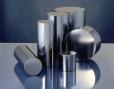
ANSTO is one of the world's leading providers of irradiation services for silicon ingots, which are used by the multimillion dollar electronics industry across Europe and Asia. Each year, ANSTO irradiates more than 50 tonnes of silicon.
ANSTO has made progress on a more cost-effective way to produce the medical radioisotope molybdenum-99 (Mo-99), with less enrichment of uranium-235 (U-235) and produce less waste.