
AANSS 2024 - Prizes & Awards
You are invited to submit to the various awards


Showing 781 - 800 of 1705 results
You are invited to submit to the various awards
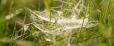
The Australian crab spider Saccodomus formivorus is the only spider known to weave a unique basket-like web; however, the key to its remarkable design and robust structure is unknown.
Dr Jessica Hamilton, a beamline scientist at the Australian Synchrotron, has won the Falling Walls Lab competition hosted by the Australian Academy of Science for her 3 minute presentation on a novel approach to using mining waste for carbon dioxide capture and a source of carbonate minerals. The event is held to deliver solutions to some of the most promising challenges of our time.
ANSTO has made progress on a more cost-effective way to produce the medical radioisotope molybdenum-99 (Mo-99), with less enrichment of uranium-235 (U-235) and produce less waste.
New researcher joins human health team to focus on role of acquired immunity in preventing disease
Health researchers have developed a new method for producing PET radiotracers.
ANSTO’s Centre for Accelerator Science measures extra-terrestrial plutonium in a study to clarify the origin of the heavier elements
Dr Emily Finch, Microscopy Group Manager at the Australian Synchrotron, has been selected among fourteen up-and-coming leaders of Australian science to participate in Australian Academy of Technological Sciences and Engineering (ATSE) Emerging Leaders Network 2026 which supports high-potential rising professionals in STEM.

In Australia and the Southeast Asia basin, the ANSTO facility offers a wide range of unique nuclear-beam techniques for cultural heritage research.
Radiocarbon study provides insight into soil carbon dynamics and effects of agriculture.
Environmental scientists at ANSTO have been undertaking research to gain a better understanding of the potential impact of contaminants on decommissioned offshore oil and gas infrastructure since 2017
The National Deuteration Facility is providing deuterated cholesterol, an essential ingredient in lipid nanoparticles for the delivery of vaccines using mRNA, to academic and industry partners.