
Visit the Australian Synchrotron
ANSTO's Melbourne location is home to the ANSTO-owned and operated Australian Synchrotron. The Synchrotron is one of the Australia's most significant pieces of scientific infrastructure.


Showing 81 - 100 of 131 results
ANSTO's Melbourne location is home to the ANSTO-owned and operated Australian Synchrotron. The Synchrotron is one of the Australia's most significant pieces of scientific infrastructure.

Guidance for obtaining and maintaining human or animal ethics approval at the Australian Synchrotron.
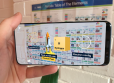
This science week ANSTO (August 10th - 18th) is running a classroom competition using the ANSTO Periodic Table and our new ANSTO XR app.

In accordance with the Trust Deed, the United Uranium Scholarship is awarded to ‘promising young scientists’ from any Australian organisation or institution whose research or work is in the field of nuclear energy.

The National Deuteration Facility offers access to deuterated molecules prepared by both in vivo biodeuteration and chemical deuteration techniques.
International research led by Curtin University and supported by ANSTO, has identified and studied the first sauropod dinosaur gut contents found anywhere in the world. The stomach content was preserved with a reasonably complete skeleton of the Australian Cretaceous species Diamantinasaurus matildae found in Winton Queensland.
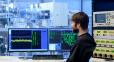
Accelerator Mass Spectrometry (AMS) is an ultra-sensitive analytical technique based on the use of an ion accelerator as a powerful mass spectrometer.

CORIS360® GNI images gamma-ray and thermal neutron radiation sources, delivering an unprecedented ability to detect, localise, and identify nuclear materials.
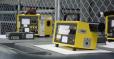
ANSTO offers reliable and traceable calibration services for radiation survey meters, contamination monitors and electronic personal dosimeters.
Latest information on the scheduled supply of our nuclear medicine production.
International palaeontologists have used advanced imaging techniques at ANSTO’S Australian Synchrotron to clarify the role that the earliest fruit-eating birds of the Cretaceous period may have had in helping fruit-producing plants to evolve.
ANSTO's Chief Nuclear Officer shares insights on the safe management of Australia's nuclear waste.
Research elucidates how in situ cosmogenic radiocarbon is produced, retained and lost in the top layer of compacting snow (the ‘firn layer’) and the shallow ice below at an ice accumulation site in Greenland.
In Australia and the Southeast Asia basin, the ANSTO facility offers a wide range of unique nuclear-beam techniques for cultural heritage research.
Innovative medical device Rhenium-SCT® therapy for non-melanoma skin cancer is now available in Australia