An in-situ experiment on Maple saplings
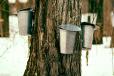
The sap extracted from Sugar Maple trees, is used to produce maple syrup. There are many conflicting theories and an absence of experimental evidence, regarding the mechanisms involved in maple sap exudation.
Showing 81 - 100 of 648 results
The sap extracted from Sugar Maple trees, is used to produce maple syrup. There are many conflicting theories and an absence of experimental evidence, regarding the mechanisms involved in maple sap exudation.
ANSTO conducts and enables research to address some of Australia’s and the world’s most challenging environmental problems.
Participants undertook IAEA training hosted by Macquarie University and ANSTO on use of radionuclides for soil and water investigations.
ANSTO and the University of Wollongong are jointly operating a unique laboratory able to extract carbon-14 (radiocarbon) atoms out of a rock that is attracting global interest as a new tool to better understand recent changes in Earth’s climate system and rates of landscape change over the past 20, 000 years.
Bushfires heat soil to extreme temperatures and this causes oxidation of chromium to a highly toxic and carcinogenic form.
The Detection & Imaging group builds on ANSTO’s 70-year history of scientific achievements and contributions in meeting the nuclear needs of industry, globally.
China’s vertical sandstone pillars studied using nuclear techniques
Ms. Nevena Kosarac completed her honours thesis under the umbrella of this project at UNSW Sydney in 2021. Ms.
Data analysis on the X-ray fluorescence microscopy beamline at the Australian Synchrotron.
Radiocarbon dating at ANSTO has supported research that vastly extends the known timeline of the Aboriginal occupation of South Australia’s Riverland region.
Miodrag Jovanovic or ‘Mike’ as more commonly known has been with ANSTO for more the 20 years.
ANSTO Synroc® is constructing an Australian radioactive waste treatment facility for the by-products of Molybdenum-99 (Mo-99) production.
Role at ANSTO