A possible world record: Studying thin films under extreme temperatures with reflectometry
A team of researchers from ANSTO and University of Technology Sydney have set a record by conducting thin film experiments at 1100 degrees C.


Showing 81 - 100 of 129 results
A team of researchers from ANSTO and University of Technology Sydney have set a record by conducting thin film experiments at 1100 degrees C.
In January 2026, Mr Michael Quigley AM, ANSTO Board Chair, shared ANSTO's Statement of Intent with the Minister for Industry and Innovation, and Minister for Science.
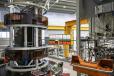
This state-of-the-art metastable-exchange optical-pumping helium-3 polarising system enables polarisation-analysis experiments on five of our existing instruments.
Researchers and industry partners from UNSW Australia, the Australian Centre for Nanomedicine, Children’s Cancer Institute and Inventia Life Sciences Pty Ltd have been awarded the 2021 ANSTO Eureka Prize for Innovative Use of Technology for their method to rapidly-produce 3D cell structures

Read about an ANSTO scientist and their work to prepare for a school project or interview.
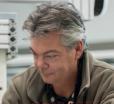

Dr David Boardman is the Chief Technology Officer & Principal Scientist for Detection & Imaging.


Following your experiment at the Australian Synchrotron there are certain tasks that users can complete including a user feedback survey and claiming reimbursement for travel expenses.

Applications are currently open for the 2024 Scholarship AINSE ANSTO French Embassies (SAAFE) Research Internship Program. The SAAFE Program supports early career researchers at PhD and Postdoctoral level to expand research and innovation activities within Human Health, the Environment and the Nuclear Fuel Cycle, to initiate sustainable research networks and linkages to support Australia, New Zealand and France research and innovation.
ANSTO recognised the contribution of individuals and teams to nuclear science and technology at the 2023 ANSTO Awards Ceremony held on 25 July.

The International Synchrotron Access Program (ISAP) is administered by the Australian Synchrotron and is designed to assist Australian-based synchrotron users to access overseas synchrotron related facilities.
Study shows for the first time that vegetation in the Windmill Islands, East Antarctica is changing rapidly in response to a drying climate.