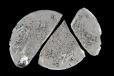
The impact of boron on glass surface properties
Within the bulk structure of such glasses, boron is known to be a key actor, as it exhibits intriguing and composition-dependent changes in coordination state that often drive properties.


Showing 801 - 820 of 1156 results
Within the bulk structure of such glasses, boron is known to be a key actor, as it exhibits intriguing and composition-dependent changes in coordination state that often drive properties.

Work with our scientists to deliver the best possible decommissioning outcome for your organisation.
Media statement from ANSTO.
ANSTO’s National Deuteration Facility has provided deuterated cholesterol for international research to gain a better understanding of how the Spike protein of the COVID virus, SARS-Co-V-2, infects human cells through a membrane fusion mechanism.
A large international team has provided an understanding of how nanoscale interactions affect the thermal stability of a type of next generation organic solar cells.
Doping with transition metals produced stability in bismuth oxide.
Doping with transition metals produced stability in bismuth oxide.
Sample environments, Data analysis, SpICE and SICS
Environmental scientists at ANSTO have been undertaking research to gain a better understanding of the potential impact of contaminants on decommissioned offshore oil and gas infrastructure since 2017
ANSTO participation in ARC on Intelligent Robotic Systems for Real-time Asset Management has potential benefit in the management of infrastructure and assets
Australia’s new state-of-the-art nuclear medicine facility gets green light.
$80.2 million in new funding to expand the research capabilities of the Australian Synchrotron.
Science and medical experts meet in Adelaide to discuss great potential of particle therapy in Australia
Research indicates that the portable x-ray fluorescence (XRF) is an appropriate analytical technique for determining seafood provenance at external sites.
A large international collaboration has developed a straightforward and cost-effective synthesizing approach using a 3D printing technique to produce single atom catalysts (SACs)—potentially paving the way for large scale commercial production with broad industrial applications.
An Australian-led international research team, including a core group of ANSTO scientists, has found that doping a promising material provides a simple, effective method capable of extracting uranium from seawater.