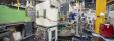
Kowari - Strain Scanner
Kowari, a residual stress diffractometer, can be used for ‘strain scanning’ of large engineering components as large as 1000 kilograms.


Showing 101 - 120 of 253 results
Kowari, a residual stress diffractometer, can be used for ‘strain scanning’ of large engineering components as large as 1000 kilograms.

Online and interactive while in your home. Kids can zoom into these school holidays workshops and create movies, animations, arcade games, roller coasters and more. Limited spaces: book now.

At ANSTO we understand that diverse teams produce better outcomes – and we value the merit that a diverse perspective can bring to the quality and outcomes of our work, and the way we get the job done.
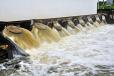
A group from Monash university has sought to make a new innovative nano-porous sieve material which has the potential to be produced on a global scale and is effective for a much longer time.
Research will change understanding of Australian Aboriginal rock art found in rock shelters of the Kimberley and its relationship to a changing landscape


Over the last decades, neutron, photon, and ion beams have been established as an innovative and attractive investigative approach to characterise cultural-heritage materials.
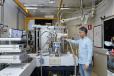
The THz/Far-IR Beamline couples the high brightness and collimation of a bend-magnet synchrotron radiation to a Bruker IFS125HR spectrometer providing high-resolution spectra (0.00096 cm-1) with signal to noise ratio superior to that of thermal sources up to 1350 cm-1 for gas-phase applications; the beamline also delivers signal to noise ratio superior to that of thermal sources up to 350 cm-1 for condensed phase samples.

Think Science! 2023 Summary and Results
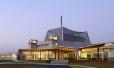
The OPAL research reactor's design and integrated safety features mean it is extremely safe; a fact confirmed by independent analysis.

Frequently asked questions about the ANSTO Security Process, travel funding, ANSTO Research Portal and ACNS Customer Portal.
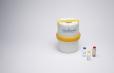
Supporting healthcare professionals in Australia with easy-to-access resources related to ANSTO’s Gentech® Generator.

Deaf Youth Science Camp is back for 2026! Deaf Youth Science Camp (DYSC) is a fun 4-day immersive science experience for Deaf/hard-of-hearing young people (aged 12-17 years old). Held at ANSTO at Lucas Heights, Sydney, the camp is a mix of hands-on science activities, outdoor activities and excursions to nearby science centres. Participants will work with Deaf professionals to learn about careers in STEM, develop personal and leadership skills and meet new friends. This camp is hosted by Deaf Youth Australia and ANSTO, and funded by a National Science Week grant.
ANSTO provides trusted advice, training and consultancy services to Australia’s resource sector.