Teacher Resources
Discover a plethora of Teacher Professional Development and Education Resources designed for both Australian and International teachers.


Showing 1221 - 1240 of 1603 results
Discover a plethora of Teacher Professional Development and Education Resources designed for both Australian and International teachers.

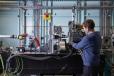
The X-ray fluorescence microspectroscopy beamline offers a range of x-ray absorption and fluorescence spectroscopy techniques at submicron length-scales. The beamline has two microscopes optimised for complementary studies.



ANSTO Publications Online is a digital repository for publications authored by ANSTO staff and collaborators since 1956.
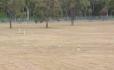
ANSTO is responsible for the Little Forest Legacy Site (LFLS) located within the ANSTO Buffer Zone boundary. This site, formerly known as the Little Forest Burial Ground (LFBG), was used by the Australian Atomic Energy Commission (AAEC) during the 1960’s to dispose of waste containing low levels of radioactivity and beryllium oxide (non-radioactive) in a series of shallow trenches. There has been regular monitoring of the site since 1966 and the results have been reported in ANSTO’s environmental monitoring reports.
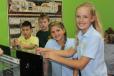
Book a date with the Discovery Centre for your class.

Laura Maynard is a Radioactive Waste Management Specialist working in ANSTO’s Nuclear Waste Solutions division.


A selection of research highlights, instrument news and technical developments for scientists.

How can you speed up your production pathway to better surface modification?
Using the theory of compressed sensing technology, a team of physicists and scientists invented and developed the CORIS360® platform imaging technology. Compressed sensing imaging can generate an image with far fewer samples compared with traditional imaging techniques.
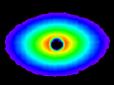
Specifications, User Manual, Instrument reference.
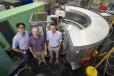
Neutron powder diffraction is particularly useful for materials with light elements in the presence of heavy ones and for magnetic materials such as superconductors, pharmaceuticals, aerospace alloys and much more.
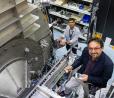
The QUOKKA instrument provides the powerful technique of small-angle neutron scattering which can look at sizes and structures of objects on the nanoscale including soft matter.

In space, without the protection of the magnetosphere, the type and dose of radiation is considerably different to what is naturally experienced on earth. However, it is the secondary particles of lower energies created when galactic and cosmic radiation interacts with shielding that is of concern for astronauts.