
Sydney


Showing 1241 - 1260 of 2699 results
Phenomenon predicted by Nobel Prize recipient

Professor of Soil Science at The University of Queensland, Peter Kopittke and partner investigator Prof Enzo Lombi of the University of SA are very optimistic about the use of a new synchrotron-based imaging technique that captures in 3D the complex interaction of soil and root.
A large international team led by scientists from the Institute for Superconducting and Electronic Materials at the University of Wollongong has verified that the introduction of novel molecular orbital interactions can improve the structural stability of cathode materials for lithium-ion batteries.
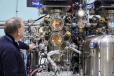
Technical information on the Soft X-ray spectroscopy beamline at the Australian Synchrotron.
High intensity X-ray beam provides insights into the activity of natural killer cells.

Young physicist in training to become a surrogate inspector for Comprehensive Nuclear Test Ban Treaty Organisation.


Archive of ANSTO research publications, seminars and short talks.
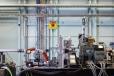
Samples on the X-ray fluorescence microscopy beamline at the Australian Synchrotron.
Using nuclear techniques to help sustain Australia's finite groundwater resources
ANSTO is participating in a major project to learn more about an important component of the atmosphere, the hydroxyl radical.
On average, there is now 17 per cent less rainfall across Western Australia’s south-western region than was recorded prior to 1970. This rainfall reduction has economic, social and environmental implications for the region, in particular for the growing capital of Perth, as well as water-dependent industries in the state.