
A free, nationwide science competition for primary and secondary school students in Years 3 to 10, Think Science! encourages students to work as part of a team to perform an investigation using the Science Inquiry skills from the Australian Curriculum and document their process and findings in a video. Over $10,000 in prizes are on offer for winning schools and students.

Showing 1341 - 1360 of 2070 results
Neutron instrument Dingo captures the life of dinosaurs and other early creatures frozen in stone

Think Science!
Plans to safely manage medical and research waste
ANSTO will make an application to the independent nuclear regulator, ARPANSA, to vary its license for its Interim Waste Store. The original operating license was approved in 2015, enabling the facility to hold what is called a TN-81 cask of intermediate-level radioactive waste that was safely repatriated from France in 2015.
Experiments carried out on Antarctic flight
State- of-the-art microdosimeters used in research
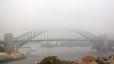
Investigating Ozone
Ozone in the upper atmosphere is a crucial shield of UV, but ozone at surface levels is a respiratory irritant and health hazard.
Students investigate surface-level ozone concentrations in the air around Liverpool, NSW, using descriptive statistical analysis, a univariate analysis and a bivariate analysis to explore the data. Students also investigate the relationship between ozone concentration and certain pollutant gases, as well as the effect of temperature.

User Meeting 2020 Prizes & Awards
Awards and prizes granted at the User Meeting 2020 for scientists.
Interactions of nanoplastics
Exploring the interaction of polystyrene nanoplastics and blood plasma proteins.
Acute Myeloid Leukemia

Deuterated ionic liquids
3D printing of single atom catalysts pioneered by research team for industrial chemical and energy applications
A large international collaboration has developed a straightforward and cost-effective synthesizing approach using a 3D printing technique to produce single atom catalysts (SACs)—potentially paving the way for large scale commercial production with broad industrial applications.
Evidence of quantum state in spin cluster chain
Phenomenon predicted by Nobel Prize recipient
Understanding pollutants impact
Research highlights how biodistribution of a toxic substance essential to understand all exposure risks.
Radiocarbon is a powerful tracer for ocean circulation and climate studies
Radiocarbon analyses on corals from two sites in Australian waters of the southwest (SW) Pacific has indicated significant changes in ocean circulation in the Pacific and large climate variability during the early to mid-Holocene period (8,000-5,400 years ago).
Blueprint for future drugs
Structure of protein involved in immune response pair revealed.
New therapy targets aggressive form of leukaemia
Physicist recognised for international contributions to space research
Patented technology removes key radioactive contaminant in critical minerals processing
ANSTO has been granted a patent in Australia and a number of European countries for the separation, a key radioactive contaminant in critical minerals processing, actinium-227, from process liquors used in minerals extraction.
International researchers overturn assumptions about the structure of most widely used hydrogel
Research confirms that methylcellulose, one of the most widely used hydrogel-forming materials in biomedical research and consumer products, organises itself into a structural architecture
Searching for skyrmions
Neutron scattering helps clarify the arrangement of magnetic vortices, skyrmions, in material