Minister announces new detector
Australian-first detector to accelerate cancer research unveiled.


Showing 141 - 160 of 675 results
Australian-first detector to accelerate cancer research unveiled.
International research led by Monash University and the Peter Doherty Institute for Infection and Immunity has achieved a proof of concept for a new, fast, portable saliva screening test that uses an infrared light technology to confirm infection with SARS-CoV-2.

PFAS chemicals in packaging pose serious environmental and health risks, but Australia’s packaging industry is leading the way to phase them out. Backed by cutting-edge nuclear science, industry-led action is creating safer packaging solutions for all Australians.
A research team from ETH Zurich developing and characterizing silicon carbide devices for power electronics, recently spent time at ANSTO’s Centre for Accelerator Science to use a specialised beamline in their investigations.
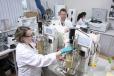
The National Deuteration Facility offers the facilities and expertise to produce molecules where all or part of the molecular hydrogen is replaced with deuterium. This enables complex investigations of the relationship between the structure of molecules and their function using neutron scattering and other techniques.
The Government is safeguarding Australia’s sovereign capability to produce vital nuclear medicines by launching a $30 million project to design a new world-leading manufacturing facility to be built at Lucas Heights in Sydney.
The Australian Centre for Neutron Scattering and National Deuteration Facility have announced the first recipients of the Neutron and Deuteration Impact Awards.
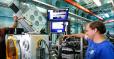
Beamtime guide on the SAX / WAXS beamline at the Australian Synchrotron.
ANSTO launches new area of space research in collaboration with the National Centre for Space Studies and the National Institute of Health and Medical research in France.
2016 National Research Infrastructure Roadmap has been re;leased by the Federal Government.

In space, without the protection of the magnetosphere, the type and dose of radiation is considerably different to what is naturally experienced on earth.

Having completed an undergraduate degree in Mechanical and Manufacturing Engineering/Materials Science at UNSW, I’m currently working at ANSTO as part of the Graduate Development Program.
The National Deuteration Facility has developed a capability to use a flow chemistry process to increase efficiency, increase production capacity and reduce decomposition in the synthesis of deuterated molecules.
With a well-established portfolio of nuclear research and the operation of Australia's only nuclear reactor OPAL, ANSTO scientists conduct both fundamental and applied research on fuel for current, advanced, and future nuclear technology systems.
Research will change understanding of Australian Aboriginal rock art found in rock shelters of the Kimberley and its relationship to a changing landscape
Multi-million dollar Australian Cancer Research Foundation (ACRF) Detector launched at the Australian Synchrotron,
Guide to successful proposals and experiments at the Powder Diffraction beamline.