Vice President of the German Parliament visits
Wolfgang Kubicki, MdB and a small delegation visited to see the Spatz neutron instrument donated by Helmholtz Zentrum Berlin (HZB) and discuss research.


Showing 1521 - 1540 of 2127 results
Wolfgang Kubicki, MdB and a small delegation visited to see the Spatz neutron instrument donated by Helmholtz Zentrum Berlin (HZB) and discuss research.

Think Science! 2023 Summary and Results
International neutron scattering award for retired head of former Bragg Institute, Prof Robert Robinson

Production of nuclear medicine generators has resumed, with all relevant quality control checks passed, and medicine to be distributed across Australia from Sunday 25th October 2020.
Radioisotope tracing technique are used to understand the uptake of contaminants, and nutrients, bioaccumulation, by aquatic organisms and terrestrial plants.
AINSE study tour takes ANSTO and key stakeholders to Japan.
A large team of international researchers have used synchrotron techniques to understand how key proteins contribute to the virulence of the rabies virus, sometimes called the “zombie virus.”
Using PET and simulations to verify the accuracy of dose and range in advanced therapy with heavy ions
A team of researchers from ANSTO and University of Technology Sydney have set a record by conducting thin film experiments at 1100 degrees C.
Research to provide critical knowledge on groundwater residence times, important catchments and aquifers in order to ensure sustainable yields of groundwater resources.
Study shows for the first time that vegetation in the Windmill Islands, East Antarctica is changing rapidly in response to a drying climate.
A number of sophisticated non-invasive nuclear and accelerator techniques were used to provide information about the origin and age of an Australian Aboriginal knife held in the collection of the Powerhouse Museum.
ANSTO expertise focused on understanding of reduced water levels at Thirlmere Lakes in three year collaborative project
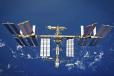
In space, without the protection of the magnetosphere, the type and dose of radiation is considerably different to what is naturally experienced on earth. However, it is the secondary particles of lower energies created when galactic and cosmic radiation interacts with shielding that is of concern for astronauts.