
Principal Scientist - Soft x-ray spectroscopy


Showing 161 - 180 of 264 results

The Detection & Imaging group builds on ANSTO’s 70-year history of scientific achievements and contributions in meeting the nuclear needs of industry, globally.

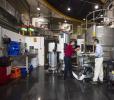
The Minerals consultancy group at ANSTO has expertise in chemical engineering, metallurgy, mineralogy, chemistry, geology, and radiation safety. We can support our client's project by providing process development services, technical review, and research.


Monica Hibberd and Hamish McDougall are working together on research into greener and more efficient energy and battery technology.
The most important data from NASA’s first crewed Artemis mission may not be its photographs, but the radiation measurements that will shape how humans work and survive beyond travel farther from Earth’s magnetic shelter safely.
Using neutron imaging techniques at ANSTO, researchers from Macquarie University have gained a better understanding of how corrosion forms and spreads through concrete that is commonly used in sewer pipes.
Study helps make carbon dating a more accurate chronological tool.
ANSTO expertise focused on understanding of reduced water levels at Thirlmere Lakes in three year collaborative project
ANSTO offers a diverse range of career opportunities within science, engineering, corporate services and trade disciplines.
Monash University, University of Queensland and Australian National University researchers have used ANSTO’s Australian Synchrotron in their study of meteorites found on Earth that could be used in future to find evidence of life on the planet Mars.
ANSTO launches new area of space research in collaboration with the National Centre for Space Studies and the National Institute of Health and Medical research in France.

At ANSTO we understand that diverse teams produce better outcomes – and we value the merit that a diverse perspective can bring to the quality and outcomes of our work, and the way we get the job done.
Measurement research undertaken to ensure safe, well-engineered nanoparticles

The OPAL research reactor's design and integrated safety features mean it is extremely safe; a fact confirmed by independent analysis.