Resources Sector
Our world is rapidly transitioning to renewable energy and electric transport systems that require the safe and efficient mining of various metals.


Showing 161 - 180 of 791 results
Our world is rapidly transitioning to renewable energy and electric transport systems that require the safe and efficient mining of various metals.
Bushfires in proximity to ANSTO during the 2018 bushfires.

ANSTO shared expertise on next-generation reactors and nuclear power with sustainable energy experts at the Australian Academy of Science symposium in May.

ANSTO is seeking nominations for the ANSTO Australian Synchrotron Stephen Wilkins Thesis Medal.
ANSTO is seeking nominations for the ANSTO Australian Synchrotron Stephen Wilkins Thesis Medal.
ANSTO is seeking nominations for the ANSTO Australian Synchrotron Stephen Wilkins Thesis Medal.
Highlighting the contribution of four inspirational ANSTO leaders on International Women's Day.
Cracking the code for crop nutrition and food quality with X-ray fluorescence microscopy.

The project aims to engage the wider cultural heritage community in addition to our internal research.

ANSTO's OPAL reactor is one of the world's most advanced and reliable research reactors today. To ensure we can continue operating OPAL safely and reliably and maximise utilisation, ANSTO must regularly carry out maintenance and upgrades.

ANSTO contributes to new international project to improve how the world assesses the economic viability of Small Modular Reactors
Restoring soil carbon can bring benefits for agricultural productivity and climate change mitigation.

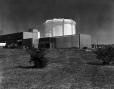
In April 15, 1953, Australia entered the nuclear science arena, when the Atomic Energy Act came into effect. The Australian Atomic Energy Commission (AAEC) followed and in 1987 the AAEC evolved into the Australian Nuclear Science and Technology Organisation (ANSTO) as it’s known today.

An investigation that set out to resolve some of the uncertainty in the sources and quantities of pollutants reaching Antarctica has produced a new experimental technique to identify and characterise recently terrestrially-influenced air reaching Antarctica.