Dr Abdella Ahmed joins team
Using PET and simulations to verify the accuracy of dose and range in advanced therapy with heavy ions


Showing 1781 - 1800 of 2699 results
Using PET and simulations to verify the accuracy of dose and range in advanced therapy with heavy ions
Groundbreaking research published today in the Journal of Vertebrate Paleontology by the Museums Victoria Research Institute and Monash University unveiled a landmark discovery – fossils of the world’s oldest known megaraptorid and the first evidence of carcharodontosaurs in Australia.
Neutron association award to energy materials researcher Prof Vanessa Peterson.
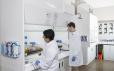
ANSTO’s Radioanalytical Chemistry (RAC) facility combines techniques in radiochemistry and radiological measurement by alpha spectrometry, gamma-ray spectrometry, and liquid scintillation analysis to deliver radiological assessments.
A site for the National Radioactive Waste Management Facility has been acquired, with the new facility to be built near the town of Kimba on the South Australian Eyre Peninsula.
German ambassador visits to see a ‘sparrow’ being assembled.
3D models of multilayered structures on engineering scale from nanoscale damage profiles.
The Australian Nuclear Science and Technology Organisation (ANSTO) has joined a team, lead by the US Department of Energy’s Pacific Northwest National Laboratory (PNNL), to install a high resolution monitoring system at ANSTO’s medical isotope production facility in Lucas Heights, Australia.
An unusual and very exciting form of carbon - that can be created by drawing on paper - looks to hold the key to real-time, high throughput DNA sequencing, a technique that would revolutionise medical research and testing.
Australian scientists from ANTSO have congratulated their British colleagues for a major advance in their quest to develop practical nuclear fusion.
An article in Nature Geosciences has highlighted the power of synchrotron techniques to reveal the inner workings of volcanic systems that could potentially help with predictions of eruptions.
ANSTO will participate in a New Zealand Marsden project which will search for chemical clues linked to the origins of life on Titan, Saturn’s largest moon.