
Beamtime Guide, Technical Info and Updates - MX1 & MX2
The Macromolecular Crystallography beamlines at the Australian Synchrotron (MX1 and MX2) are general purpose crystallography instruments for determining chemical and biological structures.


Showing 1 - 9 of 9 results
The Macromolecular Crystallography beamlines at the Australian Synchrotron (MX1 and MX2) are general purpose crystallography instruments for determining chemical and biological structures.
With all excavation completed and rock removed from the underground site, the physics lab will now be built within the caverns of the Stawell Mines site.
Funding awarded for research on an additive manufacturing technique for use on rail infrastructure.
The ARC Centre of Excellence (CoE) for Green Electrochemical Transformation of Carbon Dioxide, GETCO2, will support innovative approaches to carbon capture.
From June to August we invited primary schools in Greater Sydney/Illawarra and Melbourne to participate in our 2019 Shorebirds Competition. Students in Years 3 to 6 were asked to create a public awareness poster for a threatened shorebird found in Australia.
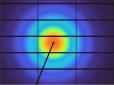
The Biological Small Angle X-ray Scattering beamline will be optimised for measuring small angle scattering of surfactants, nanoparticles, polymers, lipids, proteins and other biological macromolecules in solution. BioSAXS combines combine a state-of-the-art high-flux small angle scattering beamline with specialised in-line protein purification and preparation techniques for high-throughput protein analysis.
Primary students across Australia were invited to create a public awareness poster for a threatened shorebird found in Australia for our 2020 Shorebirds Competition. In response to COVID-19, and the changes to children’s learning environments, we opened the competition early and also included categories for individual children to enter, as well as school children.

The Advanced Diffraction and Scattering beamlines (ADS-1 and ADS-2) are two independently operating, experimentally flexible beamlines that will use high-energy X-ray diffraction and imaging to characterise the structures of new materials and minerals.

Archive of ANSTO research publications, seminars and short talks.