Restarting a nuclear reactor series: It’s all in the preparation and slow and careful actions
ANSTO recently re-started the OPAL Reactor after a six-month shutdown for essential maintenance and the installation of an upgraded facility.


Showing 1 - 20 of 26 results
ANSTO recently re-started the OPAL Reactor after a six-month shutdown for essential maintenance and the installation of an upgraded facility.
The installation of a cold neutron source (CNS), a component that reduces the energy and speed of the neutrons from a research reactor for use in scientific instruments, was successfully completed in September 2024.
The nuclear analysis team at ANSTO recently had a significant role in the re-design and optimisation of a cold neutron source facility for the reactor, its installation and the subsequent restart after a six-month shutdown.
A new nuclear medicine waste processing facility that showcases ANSTO Synroc technology is under construction.

See details of previously published customer updates from our Health products team.
ANSTO is a unique national science organisation that began operating under its predecessor The Australian Atomic Energy Commission (AAEC) 70 years ago.

ANSTO's OPAL reactor is one of the world's most advanced and reliable research reactors today. To ensure we can continue operating OPAL safely and reliably and maximise utilisation, ANSTO must regularly carry out maintenance and upgrades.

On the 10th of October 2025, the Minister for Industry, Science and Technology provided his Statement of Expectations to ANSTO.

Australia’s Open Pool Australian Lightwater (OPAL) reactor is a state-of-the-art 20 megawatt multi-purpose reactor that uses low enriched uranium (LEU) fuel to achieve a range of activities to benefit human health, enable research to support a more sustainable environment and provide innovative solutions for industry.
In a new study published in Nature Communications, researchers from UNSW have demonstrated a more sustainable alternative: an electrochemical pathway that couples carbon dioxide and nitrogen-containing species to produce urea under mild conditions.
ANSTO’s OPAL multi-purpose research reactor at Lucas Heights has officially returned to power and recommenced operations, following a months-long planned shutdown to carry out essential maintenance and upgrades.
The nature of Metal-Oxide-Semiconductor Field Effect Transistors (MOSFETs) present a fascinating paradox in space exploration. Their strength in radiation detection becomes their weakness in space operations, exposing an Achilles' heel for NASA. Yet, these same devices monitor radiation doses received by humans on earth and in space.
ANSTO's Chief Nuclear Officer shares insights on the safe management of Australia's nuclear waste.

Detailed data on ANSTO electricity use and CO2 emissions for FY2024 - FY2025
Advances in radon measurement technology by ANSTO researchers over the past decade have enabled the improved characterisation of the composition of pristine air masses that reach Antarctica.
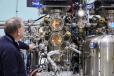
Technical information on the Soft X-ray spectroscopy beamline at the Australian Synchrotron.
ANSTO recognised the contribution of individuals and teams to nuclear science and technology at the 2023 ANSTO Awards Ceremony held on 25 July.
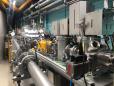
The Medium Energy- X-ray Absorption Spectroscopy beamlines provides access to XANES and EXAFS data from a bending magnet source, optimised for cutting-edge applications in biological, agricultural and environmental science in an energy range that is not currently available at the Australia Synchrotron.