

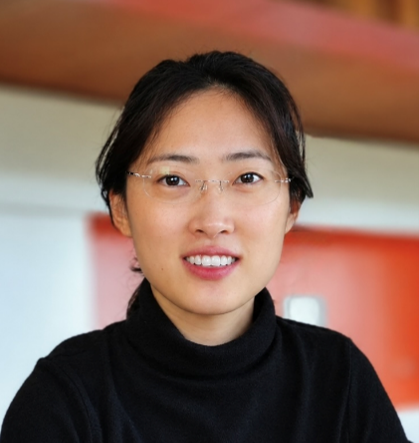
Dr Hanweng Fan, a Postdoctoral Research Fellow at RMIT University, has been awarded the Early Career Researcher Award at the 2026 Users Meeting at the Australian Synchrotron.
She is developing advanced materials for rechargeable batteries that could help make future energy storage more reliable, affordable and sustainable. By combining innovative materials design with advanced X-ray techniques at ANSTO's Australian Synchrotron, she is investigating the chemical and structural changes that occur inside batteries during charging and discharging, uncovering the causes of battery degradation and identifying ways to improve performance.
Developing longer-lasting lithium-ion batteries
Dr Fan completed a joint PhD in Materials Engineering at the University of Wollongong and the University of Surrey in 2023, working with Professor Wei Kong Pang at Wollongong.
Her early research focused on high-energy lithium-ion battery cathodes that do not require cobalt, a metal associated with supply-chain and sustainability challenges. In a 2023 study published in Angewandte Chemie International Edition, Dr Fan and collaborators revealed the material in the cobalt-free cathode changed from one crystal structure to another and demonstrated how adding ruthenium could improve its stability.
A subsequent 2024 study in ACS Energy Letters showed that incorporating chromium could help control the movement of metal atoms within the material, reducing degradation during repeated charging and discharging. The modified cathode retained 99 per cent of its capacity after 200 cycles, compared with 74 per cent for the unmodified material.
Synchrotron X-ray measurements helped reveal the chemical and structural changes underlying these improvements, providing insights into how more durable battery materials can be designed.
Watching batteries at work
Dr Fan's research draws on multiple complementary techniques at the Australian Synchrotron, including X-ray absorption spectroscopy, soft X-ray spectroscopy, powder diffraction and micro-computed tomography. Together, these approaches allow researchers to investigate the chemical and structural changes occurring within battery materials.
A particular strength of her research is her expertise in operando experiments, which allow scientists to investigate battery materials while they are actively charging and discharging. At the XAS Beamline, powerful X-rays reveal how the chemical states and local atomic environments of elements within battery electrodes change during operation. These measurements provide insights into why batteries gradually lose performance and how their materials can be improved.
Dr Fan's involvement with the Australian Synchrotron began during her PhD at Wollongong, through an established research collaboration between Professor Pang and ANSTO Principal Scientist Dr Bernt Johannessen.
This collaboration has continued through several joint research projects and publications.
Reflecting on their longstanding collaboration, Dr Johannessen praised her scientific achievements, "Yameng's achievements are an excellent example of what can be accomplished through long-term scientific collaboration. Her ability to combine advanced materials research with sophisticated synchrotron experiments has made her a valuable contributor to the Australian Synchrotron community."
In 2025, she led a comprehensive review published in Advanced Science titled Operando Synchrotron X-ray Absorption Spectroscopy: A Key Tool for Cathode Material Studies in Next-Generation Batteries. Co-authored with Dr Johannessen and Professor Pang, the review highlighted how operando XAS is advancing our understanding of rechargeable battery materials, including the development of specialised experimental cells and rapid measurements to capture chemical changes as they occur.
The review demonstrates how advances in synchrotron techniques, together with close collaboration between materials researchers and beamline scientists, can help address important challenges in next-generation battery research.
At the XAS Beamline, rapid scanning capabilities developed by the Scientific Computing Unit (SCU) in collaboration with beamline scientists enable X-ray absorption measurements to be collected in just a few seconds, providing opportunities to investigate rapidly changing chemical processes.
Advancing sodium-ion battery technology
Since joining Professor Tianyi Ma's research group at RMIT in 2024, Dr Fan has continued developing advanced battery materials, with a growing emphasis on sodium-ion technology. Sodium is abundant and widely distributed, offering a potentially lower-cost alternative to lithium for some energy storage applications. However, developing cathode materials that combine high energy storage capacity with long-term stability remains challenging.
In a 2026 study published in ACS Nano, Dr Fan and collaborators investigated how controlling the arrangement of manganese atoms within a sodium-ion battery cathode could suppress structural distortions that contribute to degradation. Combining synchrotron X-ray techniques, neutron scattering and computational modelling, the researchers established why the modified material was more stable. The study brought together researchers from RMIT, the University of Wollongong, ANSTO and international institutions.
Dr Fan also co-led a 2026 Advanced Materials study demonstrating a faster method of producing Prussian blue analogue cathode materials for sodium-ion batteries. The approach reduced synthesis time from more than 24 hours to around five hours, with promising performance demonstrated in cylindrical battery cells.
Together, these studies illustrate how her research is advancing both the fundamental understanding and practical development of next-generation batteries.
Recognising research excellence and collaboration
Dr Fan has published more than 85 peer-reviewed papers, attracting over 4,700 citations, and has become an active contributor to the Australian Synchrotron research community. She has led 11 synchrotron research projects as Chief Investigator and served on the Australian Synchrotron User Advisory Committee since 2023.
Reflecting on the importance of the Australian Synchrotron to her research, DR Fan highlighted the value of working closely with ANSTO scientists, "These collaborations have allowed us to investigate changes in battery materials that would be difficult to understand using conventional laboratory techniques, and to connect our findings with the design of better batteries."
As part of this recognition, she delivered a plenary presentation at the Australian Synchrotron User Meeting on 9–10 November 2026.
Thanks to Dr Bernt Johannessen for his contribution.


