


Showing 1 - 20 of 44 results
National Deuteration Facility 2026 Product Catalogue
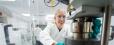
Chemical Deuteration
Chemical deuteration involves deuterating whole molecules or building blocks for the synthesis of a desired molecule by exposing them to heavy water (deuterium oxide) at high temperatures and pressures in the presence of a catalyst. If required, compounds can then be synthesised from the deuterated building blocks using organic chemistry techniques.

Pipeline Accelerator Voucher Scheme
Voucher scheme accelerating medical research
Cosmetic chemistry
Deuteration and nuclear techniques can contribute to the science of beauty.

Enhancing the oxidative stability of squalene
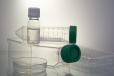
Studying enzyme mechanisms using deuterated substrates

NDF granted $2.8m NCRIS funding for expansion and development of capabilities
Grant Success
Both the Australian Centre for Neutron Scattering and the National Deuteration Facility share in grants
ANSTO welcomes federal funding announcement to support research infrastructure and expertise
New experts join Australia's nuclear agency: Focus on innovation, users delivering more benefits to Australians
ANSTO acknowledges critical financial support received by NCRIS at 20th anniversary
CEO Shaun Jenkinson, Group Executive for Nuclear Science and Technology Andrew Peele and ANSTO NCRIS Facility Directors, Jamie Schulz, Tamim Darwish, Ceri Brenner and Mitra Safavi-Naeini, attended the Parliamentary Reception to celebrate the 20th Anniversary of the Australian Government’s National Collaborative Research Infrastructure Strategy (NCRIS) in June.
User access at the National Deuteration Facility
The National Deuteration Facility offers access to deuterated molecules prepared by both in vivo biodeuteration and chemical deuteration techniques.
Statement of Intent
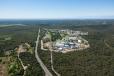
In January 2026, Mr Michael Quigley AM, ANSTO Board Chair, shared ANSTO's Statement of Intent with the Minister for Industry and Innovation, and Minister for Science.
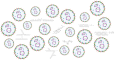
Deuteration supporting the development of next generation mRNA therapeutics
The power of deuteration brings insight for mRNA-based drug delivery and vaccines
The National Deuteration Facility is providing deuterated cholesterol, an essential ingredient in lipid nanoparticles for the delivery of vaccines using mRNA, to academic and industry partners.
Biodeuteration
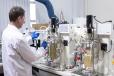
Biodeuteration involves the growth of microorganisms in a heavy water (deuterium oxide) culture medium supplemented with either a deuterated or hydrogenated carbon substrate, depending on the level of deuteration required. The biomass is harvested and the deuterated molecule (e.g. protein) is purified and characterised.
Celebrating ANSTO and 70 years of Australia’s home-grown nuclear expertise
In 2023 we’re celebrating the 70th Anniversary since Australia began developing our nation’s Australia’s nuclear capabilities.