ANSTO Australian Synchrotron User Advisory Committee (UAC)
The User Advisory Committee (UAC) is an independent group that provides advice to ANSTO Australian Synchrotron (AS) senior management on issues from a user perspective.


Showing 21 - 40 of 222 results
The User Advisory Committee (UAC) is an independent group that provides advice to ANSTO Australian Synchrotron (AS) senior management on issues from a user perspective.
Synchrotron infrared technique reveals first insights into evolution and structure of Australian basket-web spider’s silk.
A collaborative group including Monash has produced an ultra-thin and ultra-flexible organic solar cell for advanced wearable devices.
Phase contrast tomography shows great promise in early stages of study and is expected to be tested on first patients by 2020.
A special inaugural event held by ANSTO at its Australian Synchrotron for more than 30 funding organisations has showcased the first of the $100 million BRIGHT Program’s brand new, state-of-the-art beamlines.
ANSTO scientists have been featured in the new issue of Careers with STEM Science, a publication produced for high school students, undergraduates and grads, careers advisors, teachers and parents to discover careers and study paths.
Guide to successful proposals and experiments at the Powder Diffraction beamline.
Groundbreaking research published today in the Journal of Vertebrate Paleontology by the Museums Victoria Research Institute and Monash University unveiled a landmark discovery – fossils of the world’s oldest known megaraptorid and the first evidence of carcharodontosaurs in Australia.
An accomplished international photographer has capture dazzling new images of one component of the main ring at our Australian Synchrotron and provided an inside view of the electron’s path when it is used.

Guidance for obtaining and maintaining human or animal ethics approval at the Australian Synchrotron.
Collaboration across the Tasman has enabled Australian and New Zealand researchers and scientists to shed light on a protein involved in diseases such as Parkinson’s disease, gastric cancer and melanoma.
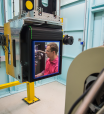
The High Performance Macromolecular Crystallography beamline will enable the study of very small (sub-5 micrometre) or weakly diffracting crystals, providing a state-of-the-art high-throughput facility for researchers. MX3 will be able to study the structures of large proteins and protein complexes for virology, drug design and industrial applications via goniometer mounted crystals, in-tray screening, or via serial crystallography methods.
La Trobe University researchers have used the Australian Synchrotron in a new study that reveals how crocodiles resist fatal fungal infections with a unique pH sensing mechanism despite living in filthy water.
Understanding how COVID supresses the immune system may lead to antiviral strategies