Scholarship recipients announced
Four successful applicants announced for the 2018 AINSE-ANSTO-French Embassy Research Internship Program.


Showing 21 - 40 of 226 results
Four successful applicants announced for the 2018 AINSE-ANSTO-French Embassy Research Internship Program.
ANSTO has a role in the global monitoring system on behalf of Australia to ensure non-proliferation of weapons and that nuclear technology is only used for peaceful purposes.
Combining resources and expertise to address climate change in the Asia-Pacific
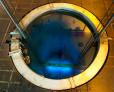
ANSTO operates a range of cobalt-60 gamma irradiators, providing the Australian community with a range of irradiation services for medical, health, industry, agriculture and research purposes.
PNG Fisheries expresses great satisfaction with the progress of aquaculture initiative.
ANSTO is delighted to announce the winners of the 2026 Think Science! competition.

The high-energy heavy-ion microprobe is used for the characterisation or modification of material properties at depths from approximately 1 micrometre to maximum depths of up to 500 micrometres from the material surface.
In January 2026, Mr Michael Quigley AM, ANSTO Board Chair, shared ANSTO's Statement of Intent with the Minister for Industry and Innovation, and Minister for Science.
A team of Australian scientists have created a new portable device that can pinpoint the exact location of radiation sources, faster and more accurately than ever before.

A world-class national research facility that uses accelerator technology to produce a powerful source of light-X rays and infrared radiation a million times brighter than the sun.
The Graduate Institute is part of ANSTO’s Innovation Precinct and links all graduates together to create a network of Australia’s brightest young minds focused on the future.

Read about an ANSTO scientist and their work to prepare for a school project or interview.
Australia part of global renaissance in fusion power research symbolised by ITER experiment
The role of trace elements as palaeoclimate proxies has been explored in ANSTO-led collaborative environmental research.

The User Advisory Committee (UAC) are pleased to present this year's invited speakers.
NSTO’S major project to introduce eight new beamlines at the Australian Synchrotron has reached a milestone with the delivery of ‘first light’ to the new MEX-1 beamline.


ANSTO is a highly regulated organisation. Our governance system and processes provide critical guidance to effectively manage ANSTO’s activities. This section outlines the processes and systems that are in place to provide assurance to Government, our stakeholders and the community that we are working within our regulated and mandated requirements.