

Showing 21 - 40 of 302 results
Potential good news for a warming world
Collaboration finds that old carbon reservoirs are unlikely to cause a massive greenhouse gas release in a warming world.
Discovery of Australia's oldest pottery rewrites understanding of Aboriginal marine history
In a paper published yesterday, Traditional Owners and researchers report on the oldest securely dated pottery discovered in Australia, located at Jiigurru (Lizard Island Group) on the Great Barrier Reef.
Using uranium to create order from disorder
The first demonstration of reversible symmetry lowering phase transformation with heating.

Radiation biology
In space, without the protection of the magnetosphere, the type and dose of radiation is considerably different to what is naturally experienced on earth.

Space radiation testing for materials and devices
ANSTO offers capabilities and expertise for the radiation testing and accreditation of space-based systems.
Revealing the sources of Sydney’s air pollution
Man-made fossil emissions larger than previously believed
ANSTO contributes to major study on global warming by measuring methane and carbon monoxide trapped in ice.

What is radiation?
Radiation can be described as energy or particles from a source that travel through space or other mediums. Light, heat, and wireless communications are all forms of radiation.
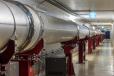
Imaging and medical
The Imaging and Medical beamline (IMBL) is a flagship beamline of the Australian Synchrotron built with considerable support from the NHMRC. It is one of only a few of its type, and delivers the world’s widest synchrotron x-ray ‘beam’.

Connect with ANSTO's Women in STEM
Read about an ANSTO scientist and their work to prepare for a school project or interview.
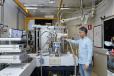
THz - Far Infrared
The THz/Far-IR Beamline couples the high brightness and collimation of a bend-magnet synchrotron radiation to a Bruker IFS125HR spectrometer providing high-resolution spectra (0.00096 cm-1) with signal to noise ratio superior to that of thermal sources up to 1350 cm-1 for gas-phase applications; the beamline also delivers signal to noise ratio superior to that of thermal sources up to 350 cm-1 for condensed phase samples.
A way forward for nuclear technology in Australia with public approval
Federal Parliament’s House Standing Committee on the Environment and Energy has presented its report, arising from its Inquiry into the prerequisites for nuclear energy in Australia today.

Powder Diffraction
The Powder Diffraction beamline at the Australian Synchrotron is optimised for carrying out structural investigation under non ambient conditions and as a function of time.

Shorebirds Competition 2022
ANSTO is proud to host the Shorebirds Competition for the fifth year. This unique environmental poster competition is free to enter and offers over $4500 in prizes for students and schools!
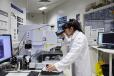
Infrared microspectroscopy
The Infrared Microspectroscopy beamline combines the high brilliance and collimation of the synchrotron beam through a Bruker V80v Fourier Transform Infrared (FTIR) spectrometer and into a Hyperion 3000 IR microscope to reach high signal-to-noise ratios at diffraction limited spatial resolutions between 3-8 μm.

User access at the National Deuteration Facility
The National Deuteration Facility offers access to deuterated molecules prepared by both in vivo biodeuteration and chemical deuteration techniques.

Melbourne Access Proposals
ANSTO’s user office in Melbourne offers access to the Australian Synchrotron, a world-class research facility with over 4,000 user visits per year. ANSTO seeks collaboration and partnerships with research organisations, scientific users and commercial users.

Anonymised Review
ANSTO has agreed to participate in an Australian trial of a review of research infrastructure access proposals in which applicants remain anonymous to aid the removal of structural barriers to the career progression of Women in STEM.

Beamtime Guide, Technical Info and Updates - MX1 & MX2
The Macromolecular Crystallography beamlines at the Australian Synchrotron (MX1 and MX2) are general purpose crystallography instruments for determining chemical and biological structures.