Research may lead to more effective anti-tumour drug
High intensity X-ray beam provides insights into the activity of natural killer cells.


Showing 21 - 40 of 44 results
High intensity X-ray beam provides insights into the activity of natural killer cells.

ANSTO commenced an aerosol sampling program thirty years ago this week to characterise these pollutants and ultimately, identify their sources, which has taken it to the forefront of environmental monitoring of this type in Australia and the region.

The Infrared microspectroscopy microscopes can record spectra from a range of different samples; from thin microtomed sections to polished blocks and embedded particles. This section highlights the types of samples that can be analysed using the IRM beamline

ANSTO has played a formative role and continues to make important contributions using nuclear and isotopic techniques to understand past climates and patterns of change, maintain water resource sustainability and provide insights into the impact of contaminate in the environment.

ANSTO User Meeting 2021 - Speakers


Giulio Ruiu (also known as Julian) brings over a decade of specialised experience in radiation safety, with a strong focus and passion for radiation protection and the practical application of safety principles.

Dr Karina Meredith was appointed Director of the new Research and Technology Group for Environment effective 15 January 2024.
How to prepare samples for analysis on the Powder Diffraction beamline.


Role at ANSTO

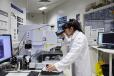
The Infrared Microspectroscopy beamline combines the high brilliance and collimation of the synchrotron beam through a Bruker V80v Fourier Transform Infrared (FTIR) spectrometer and into a Hyperion 3000 IR microscope to reach high signal-to-noise ratios at diffraction limited spatial resolutions between 3-8 μm.

At ANSTO we understand that diverse teams produce better outcomes – and we value the merit that a diverse perspective can bring to the quality and outcomes of our work, and the way we get the job done.
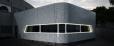
The Advanced Diffraction and Scattering beamlines (ADS-1 and ADS-2) are two independently operating, experimentally flexible beamlines that will use high-energy X-ray diffraction and imaging to characterise the structures of new materials and minerals.