Head of Radiochemistry
Role at ANSTO


Showing 21 - 40 of 115 results
Role at ANSTO
Role at ANSTO
Carl is a chemist working in radiopharmaceutical development.


Hot Isostatic Pressing supports advanced manufacturing by increasing a material's density and reducing porosity. This capability complements ANSTO’s extensive suite of instruments and techniques for characterising materials and final products.

Research can improve both food processing and food product development.



Kathleen manages the quality and document management systems, and oversees procedures for inspection, testing, and calibration of equipment and systems, to support the accelerator operations and beam lines.
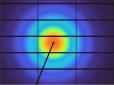
The Biological Small Angle X-ray Scattering beamline will be optimised for measuring small angle scattering of surfactants, nanoparticles, polymers, lipids, proteins and other biological macromolecules in solution. BioSAXS combines combine a state-of-the-art high-flux small angle scattering beamline with specialised in-line protein purification and preparation techniques for high-throughput protein analysis.

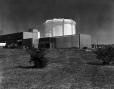
In April 15, 1953, Australia entered the nuclear science arena, when the Atomic Energy Act came into effect. The Australian Atomic Energy Commission (AAEC) followed and in 1987 the AAEC evolved into the Australian Nuclear Science and Technology Organisation (ANSTO) as it’s known today.


Thirty years of ANSTO's unique capability in monitoring fine particle pollution provides insight on bushfire smoke.

ANSTO plays a leading role in measuring and characterising fine particles from a range of locations around Australia and internationally.