

Showing 21 - 40 of 514 results
Triggers of tree mortality revealed
Advanced imaging technique used to study triggers that lead to tree death
Collaborative research brings new insights into radioactive waste, nuclear fuel and nuclear waste forms
ANSTO researchers have demonstrated longstanding expertise in the study of nuclear fuel and radioactive waste with two recent journal articles in a special issue of Frontiers of Chemistry.
Nuclear technique improves properties of innovative bone implant material
A long-standing collaboration led biomedical researchers from the University of Sydney has recently achieved success with the recent announcement of an innovative bone implant that significantly reduces rejection and inflammation.
Specialist expertise and capabilities at ANSTO enable an understanding and improvement of current and advanced nuclear fuel materials
With a well-established portfolio of nuclear research and the operation of Australia's only nuclear reactor OPAL, ANSTO scientists conduct both fundamental and applied research on fuel for current, advanced, and future nuclear technology systems.
Celebrating crystallography - New video
Nanoindentation + modelling = innovation for industry
Modelling and experimentation - a powerful combination in probing mechanical properties of ion irradiated materials through nanoindentation.
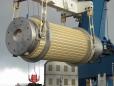
Nuclear Waste Solutions
Combining scientific expertise with more than $1.3 billion in unique operational assets to provide optimal radioactive waste solutions.
Our understanding of the atom powers ANSTO's nuclear and accelerator research techniques
Scientists at ANSTO characterise structures with atomic detail using probes such as x-rays, electrons, neutrons and ions.
Advanced manufacturing supporting green tech

Flexible, printable X-ray detectors
Low-cost X-ray detectors featuring high sensitivity, durability and physical flexibility are required in fields ranging from medical imaging to defence. In this study, a new material for X-ray detection was coupled with inkjet printing to produce a series of prototype X-ray detectors.
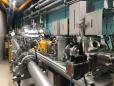
Medium Energy X-ray Absorption Spectroscopy Beamline (MEX-1 and MEX-2)
The Medium Energy- X-ray Absorption Spectroscopy beamlines provides access to XANES and EXAFS data from a bending magnet source, optimised for cutting-edge applications in biological, agricultural and environmental science in an energy range that is not currently available at the Australia Synchrotron.
ANSTO scientists among recipients of 2024 Australian Neutron Users Group Awards

Advanced Diffraction & Scattering Beamlines (ADS-1 and ADS-2) UNDER CONSTRUCTION
The Advanced Diffraction and Scattering beamlines (ADS-1 and ADS-2) are two independently operating, experimentally flexible beamlines that will use high-energy X-ray diffraction and imaging to characterise the structures of new materials and minerals.
Progress on low energy electronics
Soft X-ray experiments used to characterise new thin film topological Dirac Semimetal.
A bright future for nuclear medicine in Australia
The nuclear medicine community has welcomed the Australian Government’s decision to provide $30 million in funding to ANSTO for the design of a new nuclear medicine manufacturing facility.
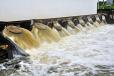
Removal of dangerous contaminants from dirty water
A group from Monash university has sought to make a new innovative nano-porous sieve material which has the potential to be produced on a global scale and is effective for a much longer time.
ANSTO researchers support study into conversion of waste heat into potential new energy source
Nuclear techniques will be crucial tools in the development of advanced materials that sustainably convert waste heat into useful forms of energy to benefit Australia.
OPAL reactor back online after planned long shutdown
ANSTO’s OPAL multi-purpose research reactor at Lucas Heights has officially returned to power and recommenced operations, following a months-long planned shutdown to carry out essential maintenance and upgrades.
Tuning thermomechanical properties
Wombat used in study that showed tuneable thermal expansion by controlled gas sorption.