Creative Kids Voucher can be used for school holiday workshops
Parents can use their NSW Government Creative Kids Voucher to pay for ANSTO's School Holiday workshops.


Showing 201 - 220 of 1123 results
Parents can use their NSW Government Creative Kids Voucher to pay for ANSTO's School Holiday workshops.
With a well-established portfolio of nuclear research and the operation of Australia's only nuclear reactor OPAL, ANSTO scientists conduct both fundamental and applied research on fuel for current, advanced, and future nuclear technology systems.

The Nobel Prizes for Physics, Chemistry and Medicine have been announced.
The mechanical, electrical, chemical, optical and thermal properties of glass, as determined by its chemical composition and atomic structure, make it a highly useful material with a myriad of applications.
ANSTO announces the recipients of the 2022 organisational awards


Explore ANSTO's range of publications and reports available for the public.

Voucher scheme accelerating medical research
Researchers from the University of Wollongong have improved a high voltage cathode material to deliver structural stability and an unprecedented electrochemical performance for lithium-ion batteries (LIBs) in work that is extendable to other types of energy storage materials.
Dr Ceri Brenner appointed new leader of the Centre for Accelerator Science
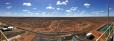
The Minerals consultancy group at ANSTO has expertise in chemical engineering, metallurgy, mineralogy, chemistry, geology, and radiation safety. We can support our client's project by providing process development services, technical review, and research.
Research infrastructure will support research and development of advanced concrete.
Using PET and simulations to verify the accuracy of dose and range in advanced therapy with heavy ions

Dr Rachel Williamson is a Principal Scientist on the MX Beamlines at the Australian Synchrotron.
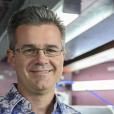
Dr Joseph Bevitt is a senior instrument scientist on the Dingo radiograph/tomography/imaging station, and scientific coordinator for the Australian Centre for Neutron Scattering.

ANSTO leverages great science to deliver big outcomes. We partner with scientists and engineers and apply new technologies to provide real-world benefits. Our work improves human health, saves lives, builds our industries and protects the environment.
Accelerator technique used in pioneering biomaterials research led by the University of Sydney.