
Electrical Technician


Showing 201 - 220 of 361 results
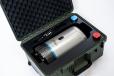
View these case studies for a more detailed look at industry challenges and how CORIS360® radiation imaging technology is improving operational decision making and keeping workers safe.
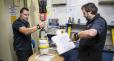
Developed by ANSTO’s predecessor the Australian Atomic Energy Commission (known as the AAEC) in the late 1960s, the Technetium-99m Generator revolutionised nuclear medicine imaging in Australia by enabling imaging procedures to be performed not only in major capital cities but throughout regional and rural Australia.
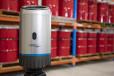

Evidence of the earliest occupation of the coasts of Australia from Barrow Island, Northwest Australia.

Australian Nuclear Science and Technology Organisation (ANSTO) is committed to protecting your personal information in accordance with the Privacy Act 1988 (Cth) (Privacy Act) and the Australian Privacy Principles.

Australasia is home to some of the oldest rock art motifs in the world. In tropical latitudes, due to climate change, the rock art deterioration is accelerating.
An unassuming rock shelter in the Flinders Ranges has been revealed as the oldest known evidence of Aboriginal Australian settlement, thanks in part to advanced nuclear techniques, technology and scientists.
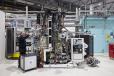
Soft x-rays are generally understood to be x-rays in the energy range 100-3,000 eV. They have insufficient energy to penetrate the beryllium window of a hard x-ray beamline but have energies higher than that of extreme ultraviolet light.

Wombat is a high intensity neutron diffractometer that is primarily used as a high-speed powder diffractometer, but has also expanded into texture characterisation and single-crystal measurement, particularly diffuse scattering.

Synchrotron light is the electromagnetic radiation emitted when electrons, moving at velocities close to the speed of light, are forced to change direction under the action of a magnetic field.
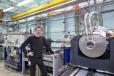
X-ray absorption spectroscopy (XAS) is a versatile tool for chemistry, biology, and materials science. By probing how x rays are absorbed from core electrons of atoms in a sample, the technique can reveal the local structure around selected atoms.

Highlights of the Magnetism Project.
Testing at ANSTO’s Centre for Accelerator Science supports an action plan just published by the Australian Packaging Covenant Organisation (APCO) to phase out per- and polyfluoroalkyl substances (PFAS) in fibre-based food contact packaging in Australia by December 2023.

Cosmogenic nuclides measurements at ANSTO to be part of large international Antarctic glacier research.
A large international team has provided an understanding of how nanoscale interactions affect the thermal stability of a type of next generation organic solar cells.