
Gamma radiation imaging technology
A new imaging technology developed at ANSTO makes it possible to image, identify and locate gamma-ray radiation in a safe and timely manner.


Showing 2001 - 2020 of 2438 results
A new imaging technology developed at ANSTO makes it possible to image, identify and locate gamma-ray radiation in a safe and timely manner.
X-ray crystallography at the Australian Synchrotron contributed to major research findings.
Tool developed for producing F-18 radiopharmaceuticals for PET imaging.
ANSTO has provided supporting experimental evidence of a highly unusual quantum state, a quantum spin liquid (QSL), in a two-dimensional material.
ANSTO groundwater experts have collaborated with the NSW Department of Planning, Industry and Environment on a comprehensive survey of groundwater resources in the state.
A large team of international researchers have used synchrotron techniques to understand how key proteins contribute to the virulence of the rabies virus, sometimes called the “zombie virus.”
New infrared imaging technique reveals molecular orientation of proteins in silk fibres
Technique provides insights into historic maritime artefact linked to early exploration of Australia.
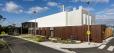
Frequently asked questions on the Mo-99 Manufacturing Facility and the ANSTO Nuclear Medicine project.
Study explored how key proteins manage dietary cholesterol absorption and elucidated crucial transport mechanisms that contribute to cholesterol balance in the body.
A targeted radioactive infusion that is a game-changer in late-stage prostate cancer can also dramatically improve outcomes for patients in earlier stages of this disease, a Peter Mac-led study has shown.
A team of scientists from The Australian National University (ANU) has discovered how a powerful “weapon” used by many fungal pathogens enables them to cause disease in major food crops such as rice and corn
Dr Rezwanul Haque, now a senior lecturer at the University of the Sunshine Coast, received a national Young Scientist Award for his earlier research using nuclear techniques at ANSTO’s Australian Centre for Neutron Scattering to find cracks and signs of stress in riveted joints in sheet metal in car bodies.
On 20 July 1969, humans landed on the moon for the very first time. As Neil Armstrong was lowered onto the surface of the moon he made the now infamous statement, “That's one small step for man, one giant leap for mankind”.
The Multi-wavelength absorption black carbon instrument (MABI), a technology designed and built at ANSTO to measure black carbon in the atmosphere is now commercially available from Thomson Environmental Systems.