
FAQs - Macromolecular Crystallography
Frequently Asked Questions on the Macromolecular Crystallography beamlines (MX1 and MX2)


Showing 221 - 240 of 374 results
Frequently Asked Questions on the Macromolecular Crystallography beamlines (MX1 and MX2)

On behalf of ANSTO thank you for your interest in our tours. We hope your visit to ANSTO will be both enjoyable and informative.

Think Science! 2023 Summary and Results
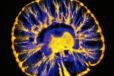
The Biosciences team undertakes the radiolabelling of chemical, biochemical. biological or material vector for the purpose of radiotracing in living systems.
Today The Australian ran a story entitled “Fears for indigenous lands as foreign nuclear waste headed our way”, 18 September 2018. ANSTO was not contacted in relation to the article, but can provide the following information in response which can be attributed to a spokesperson.
Guide to successful proposals and experiments at the Powder Diffraction beamline.
Radioisotope tracing technique are used to understand the uptake of contaminants, and nutrients, bioaccumulation, by aquatic organisms and terrestrial plants.
In an effort to understand why the Tongan Hunga volcano eruption was so explosive, internationally-recognised volcanologist Prof. Shane Cronin of the University of Auckland and associates rely on beamlines at the Australian Synchrotron to support comprehensive research on the Hunga event.
An analysis program for viewing and analysing near-edge X-ray absorption fine-structure (NEXAFS) spectra.

Accelerator Mass Spectrometry (AMS) is an ultra-sensitive analytical technique based on the use of an ion accelerator as a powerful mass spectrometer.

Investigations of various aspects of magnetism can be conducted on all neutron-scattering instruments at OPAL.

Shorebirds Competition 2022 results.

Applications, Recent results, Publications.
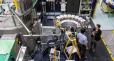
Wombat is a high intensity neutron diffractometer that is primarily used as a high-speed powder diffractometer, but has also expanded into texture characterisation and single-crystal measurement, particularly diffuse scattering.
His Excellency General the Honourable David Hurley AC DSC (Retd), Governor-General of the Commonwealth of Australia and Her Excellency Mrs Linda Hurley visited ANSTO’s Innovation Centre nandin and several facilities including the OPAL multipurpose reactor this week for a tour after learning of the ANSTO-nandin win in the NASA SpaceApps COVID 19 Challenge.
The newly built Medicines Manufacturing Innovation Centre (MMIC), co-located at the Australian Synchrotron at Clayton, was officially opened on Wednesday by the Victorian Deputy Premier and Minister for Medical Research the Hon Ben Carroll.
Two startups supported by the nandin Innovation Centre at ANSTO have hit the ground running in 2021 securing major opportunities from state governments to see their businesses thrive.