
Chronic kidney disease of unknown origin
In 2017, ANSTO's CEO signed a Memorandum of Understanding with Sri Lanka to work together to investigate the epidemiology of Chronic Kidney Disease of unknown origin (CKDu).


Showing 221 - 240 of 575 results
In 2017, ANSTO's CEO signed a Memorandum of Understanding with Sri Lanka to work together to investigate the epidemiology of Chronic Kidney Disease of unknown origin (CKDu).
ANSTO environmental scientists have alerted the scientific community of the critical need to monitor changes to ice containing potential nuclear fallout that reached Antarctica from 20th century atmospheric weapons testing.
Nuclear techniques will be crucial tools in the development of advanced materials that sustainably convert waste heat into useful forms of energy to benefit Australia.
ANSTO manufacture and supply a range of radiopharmaceuticals, radiochemicals, kits and accessories for use in research, industry and the health sector.
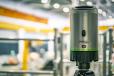
CORIS360® GNI images gamma-ray and thermal neutron radiation sources, delivering an unprecedented ability to detect, localise, and identify nuclear materials.
Virtual activities celebrating the benefits of nuclear science and technology held for National Science Week
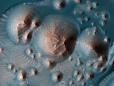
ANSTO provides a range of capabilities using neutrons, X-rays and infrared radiation to study the solids, liquids and gases that might be found in materials in our solar system and beyond.
Powder diffraction and X-ray fluorescence microscopy support investigation of pigments in rock art.
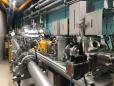
The Medium Energy- X-ray Absorption Spectroscopy beamlines provides access to XANES and EXAFS data from a bending magnet source, optimised for cutting-edge applications in biological, agricultural and environmental science in an energy range that is not currently available at the Australia Synchrotron.
Funding awarded for research on an additive manufacturing technique for use on rail infrastructure.
ITRAX has now analysed more than a kilometre of cores since it became operational in 2012.
An international team led by scientists at City University of Hong Kong has found flexible metal-organic framework (MOF) with one-dimensional channels that acts as a “molecular trapdoor” to selectively adsorb gases, such as carbon dioxide, in response to temperature and pressure changes.