

Showing 281 - 300 of 442 results
ARC Linkage grant will use synchrotron techniques to analyse and evaluate innovative battery technology
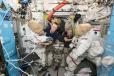
Mitigation and Optimisation of Radiation Responses
This program explores the mechanism and outcome of the interaction of radiation on biological systems in order to improve our understanding of the impact of radiation on the brain, optimise radiotherapy and develop mitigation strategies for space travellers.
Investigating a prospective light-weight fire retardant material with superior properties
Scientists from UNSW and ANSTO have characterised the structure of two-dimensional transition metal carbides, carbonites, and nitrides (MXenes) materials, that could be used as a lightweight fire-retardant filler and in energy storage devices.
Promising new proton conductor for next-generation fuel cells
ANSTO has contributed to work by scientists from the Tokyo Institute of Technology on a promising proton conductor for next-generation ceramic fuel cells.
Sutherland students ‘armed’ with skills to build a bionic hand
Big Ideas Forum
Creative ideas are the spark for great innovations: this week students from across Australia got to share their ideas through ANSTO’s Big Ideas Forum.
Unique immune system of the alpaca being used in COVID-19 research
Scientists from the Walter and Eliza Hall Institute (WEHI) are using the unique immune system of the alpaca and techniques at the Australian Synchrotron as part of research using antibodies to disrupt COVID-19 viral entry into cells.
Surface coatings on Aboriginal rock art provide insights into climate environment
Radiocarbon measurements at ANSTO’s Centre for Accelerator Science have supported research published that provided insights into what the environment was like for the Aboriginal artists who created rock art over intervals spanning 43,000 years.
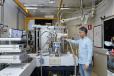
THz - Far Infrared
The THz/Far-IR Beamline couples the high brightness and collimation of a bend-magnet synchrotron radiation to a Bruker IFS125HR spectrometer providing high-resolution spectra (0.00096 cm-1) with signal to noise ratio superior to that of thermal sources up to 1350 cm-1 for gas-phase applications; the beamline also delivers signal to noise ratio superior to that of thermal sources up to 350 cm-1 for condensed phase samples.
Feathery moa’s fossilised footprints, ancient age revealed
ANSTO scientist, Dr Klaus Wilcken of the Centre for Accelerator Science, used cosmogenic nuclide dating to determine the ages of layered sand and gravel samples, in which seven footprints of the flightless bird, the moa, were found on the South Island in New Zealand in 2019.
Critical minerals projects funded under Australian Research Centre Projects Program
ANSTO is contributing to key critical minerals projects funded by the Federal Government.
Collaboration publishes landmark blue carbon study
ANSTO environmental scientists contribute to investigation of carbon capture in wetlands.
Opportunity to spend a year in industry for STEM undergraduates
Nuclear NextGen – ANSTO's Work Experience Intensive Days for 2026
Indigenous Kakadu plum farmers attend ANSTO workshop
Indigenous Kakadu plum farmers attend workshop on use and application of the elemental fingerprint technology for indigenous bushfoods provenance.
Prime Minister announces funding for Precision Medicine
Whilst at ANSTO’s Australian Synchrotron today, Prime Minister Scott Morrison announced new funding for the Australian Precision Medicine Enterprise (APME) Project. The Australian Government will contribute $23m in grant funding under the Manufacturing Collaboration Stream of the Modern Manufacturing Initiative (MMI) towards the $71.2m project.
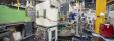
Kowari - Strain Scanner
Kowari, a residual stress diffractometer, can be used for ‘strain scanning’ of large engineering components as large as 1000 kilograms.
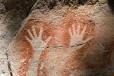
How climate change is erasing the world’s oldest rock art
Australasia is home to some of the oldest rock art motifs in the world. In tropical latitudes, due to climate change, the rock art deterioration is accelerating.