A little bit of the moon just landed at ANSTO
Research on lunar meteorite and moon crater analogues coincides with Science Week.


Showing 281 - 300 of 1123 results
Research on lunar meteorite and moon crater analogues coincides with Science Week.
Australian researchers and clinicians have recently returned from Japan where they investigated the use of advanced radiation therapy for cancer using heavy ions at particle therapy facilities on a study tour .
A “super” receptor that helps kill HIV infected cells identified.
Frequently asked questions about the ANSTO Security Process, travel funding, ANSTO Research Portal and ACNS Customer Portal.
Progress on tailorable nanoscale emulsion for a wide variety of applications including drug delivery
New research published in the journal Nature Nanotechnology shows that the next generation of lithium-sulphur (Li||S) batteries may be capable of being charged in less than five minutes, instead of several hours as is currently the case.

The User Advisory Committee (UAC) are pleased to present this year's invited speakers.
How expensive and time consuming are your tests for optimising your catalyst?
Below lists some useful programs for data reduction, search matching, analysis and structure visualisation of diffraction data.


Career Statement and Role at ANSTO

You are invited to submit to the various awards from ANSTO, User Advisory Committee (UAC) and Australian Neutron Beam User Group (ANBUG).
The first experimental evidence to validate a newly published universal law that provides insights into the complex energy states for liquids has been found using an advanced nuclear technique at ANSTO.
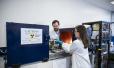
The work of the group comprises Radioactivity Measurement Standards, Radioanalytical chemistry, Environmental Radioactivity Measurement Centre, Nuclear security science and Environmental monitoring.

Dr Jamie Schulz is the Director of the Australian Centre for Neutron Scattering.
Radiocarbon dating at ANSTO has supported new archaeological research conducted by Flinders University and the University of Queensland that describes significant earth mound features used for cooking that were created by Aboriginal people in the Riverland region of South Australia.