


Showing 281 - 300 of 1113 results
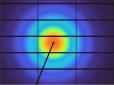
Biological small angle X-ray scattering beamline (BioSAXS)
The Biological Small Angle X-ray Scattering beamline will be optimised for measuring small angle scattering of surfactants, nanoparticles, polymers, lipids, proteins and other biological macromolecules in solution. BioSAXS combines combine a state-of-the-art high-flux small angle scattering beamline with specialised in-line protein purification and preparation techniques for high-throughput protein analysis.
Appointment of ANSTO Board Deputy Chairperson Andrew Carriline
Minister for Industry and Science, the Hon Ed Husic MP has formally announced the appointment of Mr Andrew Carriline as ANSTO Board Deputy Chairperson, effective from Thursday 9 May 2024.

Reducing cadmium in cocoa
New international limits on the cadmium content of cacao products have spurred research to discover how cadmium accumulates in cacao beans, and the effects of processing.
Minerals
ANSTO's Minerals team provides consultancy, process development and research services to the mining and minerals processing industries.
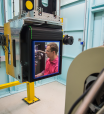
High Performance Macromolecular Crystallography Beamline (MX3)
The High Performance Macromolecular Crystallography beamline will enable the study of very small (sub-5 micrometre) or weakly diffracting crystals, providing a state-of-the-art high-throughput facility for researchers. MX3 will be able to study the structures of large proteins and protein complexes for virology, drug design and industrial applications via goniometer mounted crystals, in-tray screening, or via serial crystallography methods.

2023 Think Science Competition Summary and Results
Think Science! 2023 Summary and Results
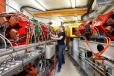
Particle Accelerators
The Accelerator Science group purse a broad research program with the aims of improving the performance and reliability of our accelerators, increasing their research capabilities and developing the next generation of accelerator technology.
Big Ideas
ANSTO Big Ideas encourages students to creatively communicate the work of an Australian scientist, and explain how their work has inspired them to come up with a Big Idea to make our world a better place. This competition is intended to engage and support Australian students in years 7-10 in Science and encourage them to pursue studies and careers in STEM.

Safeguarding the future of Australia's nuclear medicine
The new facility will be built around a product line of ANSTO’s design – a new Technetium-99m generator – that will enable greater process automation than is possible with existing technology, leading to improvements in efficiency, quality and importantly the highest levels of production safety.

AANSS 2024 - Prizes & Awards
You are invited to submit to the various awards
AANSS 2026 - Prizes & Awards
You are invited to submit to the various awards

FAQs
We have provided answers to some the frequently asked questions about the CORIS360® imaging technology.
Advanced Diffraction & Scattering Beamlines (ADS-1 and ADS-2) UNDER CONSTRUCTION
The Advanced Diffraction and Scattering beamlines (ADS-1 and ADS-2) are two independently operating, experimentally flexible beamlines that will use high-energy X-ray diffraction and imaging to characterise the structures of new materials and minerals.
Digestive brilliance of breast milk revealed

Australian access to overseas synchrotrons
The International Synchrotron Access Program (ISAP) is administered by the Australian Synchrotron and is designed to assist Australian-based synchrotron users to access overseas synchrotron related facilities.
Compressed sensing technology
Using the theory of compressed sensing technology, a team of physicists and scientists invented and developed the CORIS360® platform imaging technology. Compressed sensing imaging can generate an image with far fewer samples compared with traditional imaging techniques.

How climate change is erasing the world’s oldest rock art
Australasia is home to some of the oldest rock art motifs in the world. In tropical latitudes, due to climate change, the rock art deterioration is accelerating.
Chasing ghosts at the Australian Centre for Neutron Scattering
Neutron and gamma ghost imaging are important scientific developments reported in two publications, and the subject of an Australian Research Council Discovery Project grant awarded to a team that includes ANSTO scientists