
After your experiment
Following your experiment at the Australian Synchrotron there are certain tasks that users can complete including a user feedback survey and claiming reimbursement for travel expenses.


Showing 301 - 320 of 372 results
Following your experiment at the Australian Synchrotron there are certain tasks that users can complete including a user feedback survey and claiming reimbursement for travel expenses.
Insights into the crystallisation process of twin crystals important for drug production.
The mechanical, electrical, chemical, optical and thermal properties of glass, as determined by its chemical composition and atomic structure, make it a highly useful material with a myriad of applications.

ANSTOs capabilities are ideally suited for these investigations relating to quantum technologies.
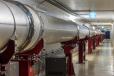
Information has been provided to assist with the preparation of experiment proposals and beamtime.
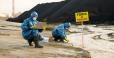
Billions of tonnes of iron ore tailings are generated each year from the mining industry. Converting these toxic tailings into soil-like materials which can develop and sustain plant and microbial communities is critical for mine site remediation and improved environmental outcomes.
Over the past 70 years ANSTO has been building Australia’s nuclear expertise and despite being small in scale, today we are complex and sophisticated nuclear nation.


Mathematical insights explain inconsistencies in experimental data: pyrochlore transformation into defect fluorite or not?

ANSTO’s Centre for Accelerator Science measures extra-terrestrial plutonium in a study to clarify the origin of the heavier elements
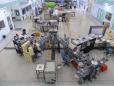
Rutherford backscattering primarily provides information about the concentration of elements VS depth in a light material.

The Think Science! competition encourages students in Years 3-10 to learn science inquiry skills in a fun and accessible way! Entry is FREE and there are generous prizes for winning schools. Any topic can be chosen, and special materials are not required.

The instrument is very well suited for the study of kinetic effects, like relaxation following a chemical reaction, or external impulses like mechanical deformation, an electric or magnetic field.
Researchers from La Trobe University have used the Australian Synchrotron to help identify a key mechanism in how SARS-CoV-2 damages lung tissue.

The Infrared microspectroscopy microscopes can record spectra from a range of different samples; from thin microtomed sections to polished blocks and embedded particles. This section highlights the types of samples that can be analysed using the IRM beamline