Meeting attracts large group of users
Combined users meeting highlights how ANSTO expertise and infrastructure can assist research community.


Showing 321 - 340 of 1280 results
Combined users meeting highlights how ANSTO expertise and infrastructure can assist research community.
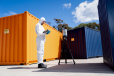
It is critical across many industries to identify and locate sources of radiation accurately and quickly. By accurately imaging radiation across the full energy range, CORIS360™ improves operational decision making across many industry settings.
SVSR is seeking a highly motivated engineering candidate with excellent communication skills to help better understand and manage odour emission from sewer ventshafts.

Australia’s best known carnivorous dinosaur Australovenator is under the microscope at ANSTO
A team of ANSTO health researchers, staff at the Centre for Accelerator Science and Dr Melanie Ferlazzo, a postdoc from the French National Institute of Health and Medical Research (INSERM), and scientists from the French Space Agency (CNES), are collaborating on investigations to determine the impact of secondary particles on human cells using the new microprobe beamline at ANSTO’s Centre for Accelerator Science.
indigenous Cultural Intellectual Property is a broader way of talking about First Peoples’ rights to their cultural heritage, traditional knowledge and cultural expressions.

ANSTO is seeking nominations for the ANSTO Australian Synchrotron Stephen Wilkins Thesis Medal.
Twenty-four participants from Asia and the Pacific travelled to ANSTO for an International Atomic Energy Agency Regional Training Course on ‘Production and preclinical evaluation of emerging cyclotron-based radiopharmaceuticals’
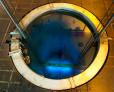
ANSTO operates a range of cobalt-60 gamma irradiators, providing the Australian community with a range of irradiation services for medical, health, industry, agriculture and research purposes.
Dr Joseph Bevitt is a senior instrument scientist on the Dingo radiograph/tomography/imaging station, and scientific coordinator for the Australian Centre for Neutron Scattering.
ANSTO researchers contribute to study which finds evidence of Aboriginal occupation 65,000 years ago in Northern Australia.
Following a decade of imaging to support research and clinical trials at ANSTO and the University of Sydney’s Brain and Mind Centre at Camperdown, two PET scanners have been transferred to the University of Wollongong.
Research has demonstrated that internally generated neutrons could be used to effectively target micro-infiltrates and cancer cells outside of the defined treatment regions.