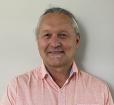
Graduate Profile - Robert Raposio
A desire to give people around the world greater access to the benefits of nuclear medicine is behind Robert Raposio and his research into producing radioisotopes in more efficient, cheaper and sustainable ways.


Showing 341 - 360 of 680 results
A desire to give people around the world greater access to the benefits of nuclear medicine is behind Robert Raposio and his research into producing radioisotopes in more efficient, cheaper and sustainable ways.
ANSTO and the Embassy of Argentina in Australia proudly hosted an event commemorating the 15th anniversary of the opening of the Open Pool Australian Lightwater (OPAL) multi-purpose nuclear reactor on 18 October.
Your efforts are helping better manage our wetlands and waterways, and protect the precious wetland birds that rely on them.
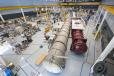
The Australian Centre for Neutron Scattering (ACNS) is a major research facility for neutron science that comprises a suite of neutron instruments with a range of techniques for scientific investigations in physics, chemistry, materials science, medicine and environmental science among other fields.

The BRIGHT Project will expand the beamline infrastructure of the Australian Synchrotron to increase both its capacity and capabilities.
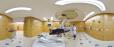
ANSTO is supporting the introduction of particle therapy, an advanced form of radiation treatment for difficult-to-treat cancers, in Australia
Award recipients Dr Richard Garrett and Dr Nigel Lengkeek with Dr Tien Pham will deliver a Distinguished Lecture on 15 November at ANSTO.
Aboriginal leaders and advocates have joined together today to call out commercial companies exploiting native food knowledge without adequate community engagement.
ANSTO shares expertise on food authenticity research using nuclear techniques with Southeast Asia stakeholders.
ANSTO has hosted its second IAEA Practical Introduction to Nuclear Forensics Regional Training Course for representatives of member countries from South-East Asia, sharing expertise on the theoretical and practical aspects of nuclear forensics to respond to incidents of nuclear or other radioactive material out of regulatory control.
Health researchers at ANSTO use world-class nuclear and isotopic techniques to undertake research and development activities to address some of the most challenging health problems.
A collaboration of scientists from RMIT, ANSTO and the CSIRO has published pioneering research that brings new insights into intrinsically disordered proteins and protein regions (IDPs)/ (IDRs) and how they behave under various physiological processes.

Applications are currently open for the 2024 Scholarship AINSE ANSTO French Embassies (SAAFE) Research Internship Program. The SAAFE Program supports early career researchers at PhD and Postdoctoral level to expand research and innovation activities within Human Health, the Environment and the Nuclear Fuel Cycle, to initiate sustainable research networks and linkages to support Australia, New Zealand and France research and innovation.

Collaborators on the Magnetism project.
Scientists have found a new approach to killing antibiotic-resistant bacteria using lipid nanoparticles that target specific layers on the surface of the bacterial cell.